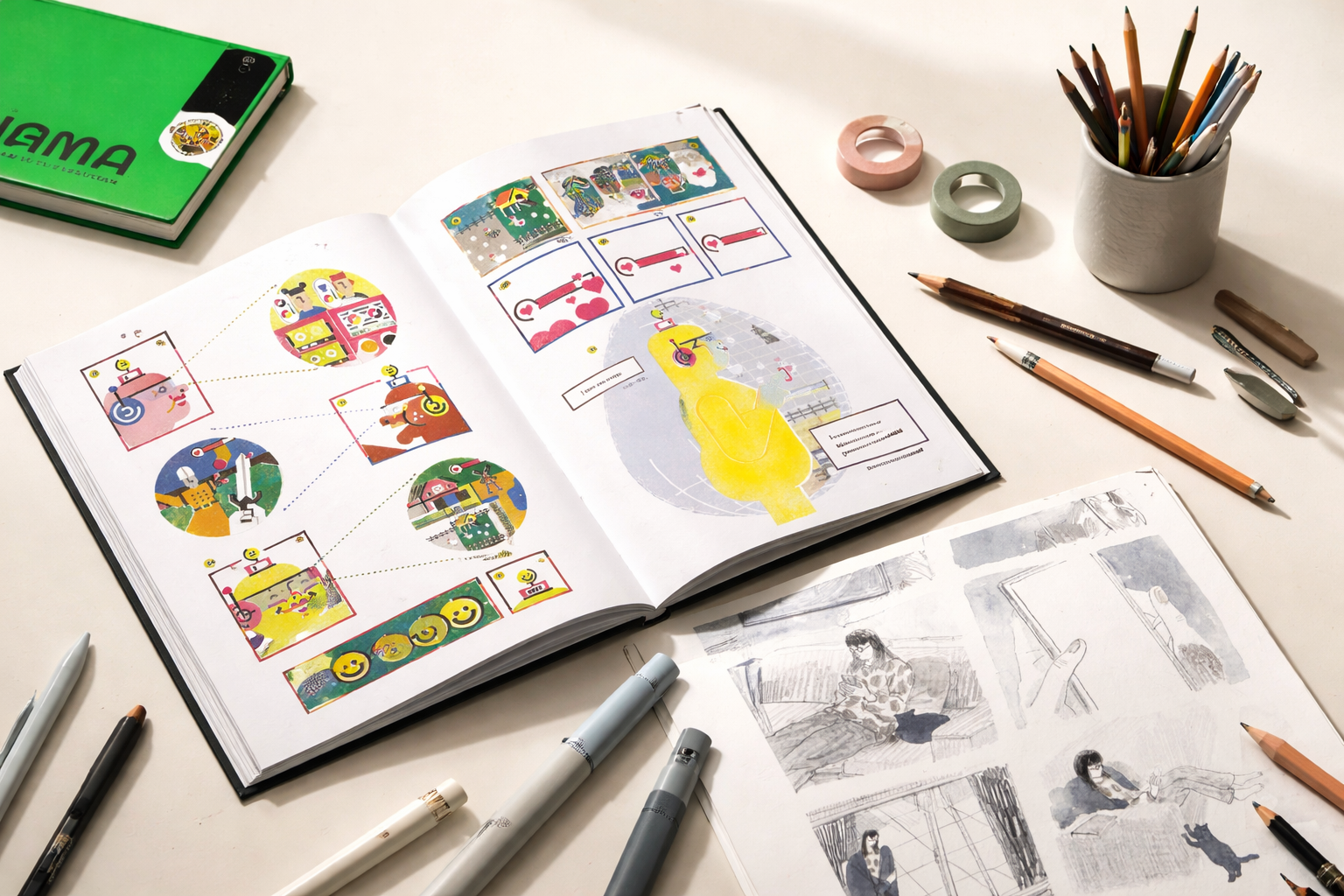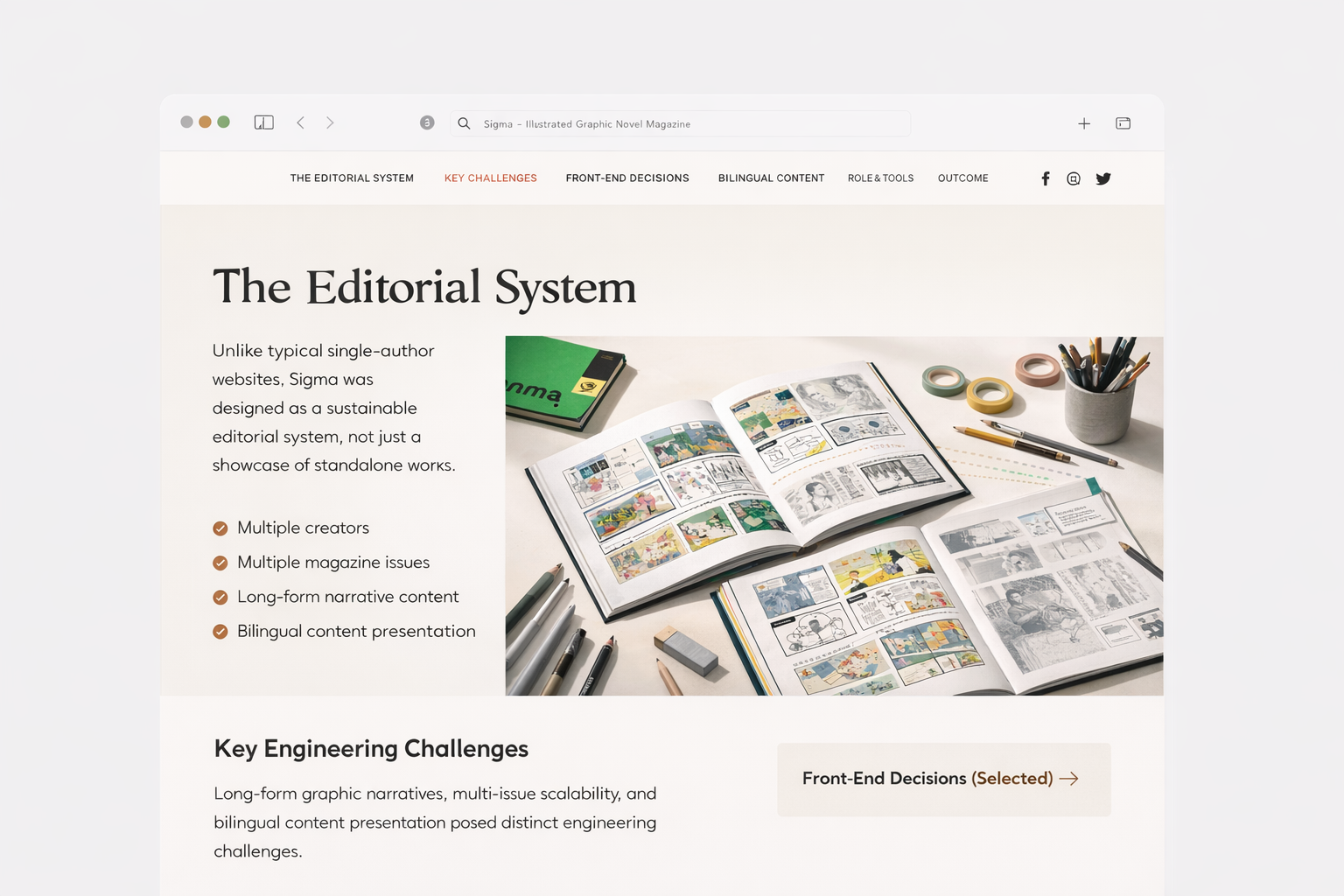
Unlike typical portfolio or single-author websites, Sigma needed to function as a living publication rather than a static collection of pages.
From a front-end perspective, the system had to support:
All of this needed to remain readable, performant, and maintainable as content grew.
Sigma was designed as an editorial system, not just a visual layout.
Each story is treated as a modular content unit rather than a fixed page. This allows different narrative structures—varying panel density, text length, and pacing—to coexist within a consistent framework.
The system anticipates future issues and contributors, ensuring that new content can be added without restructuring existing layouts.
Graphic novels rely heavily on pacing, rhythm, and visual flow.
From an engineering standpoint, this creates challenges that are very different from standard article or marketing pages.
The front-end structure prioritizes:
Rather than relying on heavy interaction or animation, the reading experience is driven by layout, typography, and whitespace—allowing the narrative to remain the focus.
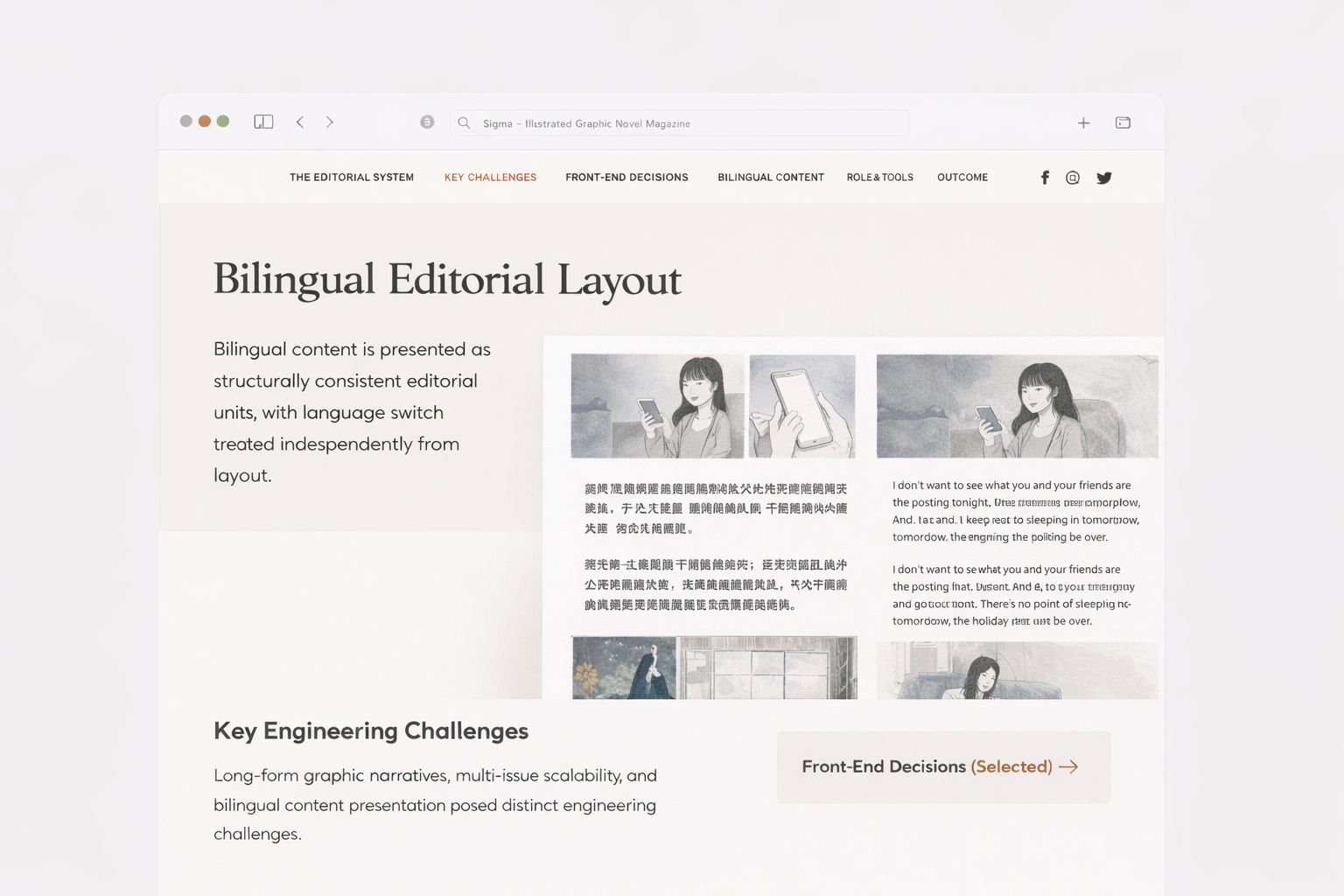
Bilingual content is treated as a content-layer decision, not a layout switch.
Both languages share the same structural hierarchy, while language selection remains independent from visual presentation. This avoids coupling language logic with layout logic and prevents text-length differences from breaking the design.
This approach keeps the system flexible for future translation updates or additional languages.
During implementation, several intentional trade-offs were made:
These decisions ensure that the system remains predictable, extensible, and easy to maintain over time.
JavaScript plays a supporting role rather than a dominant one.
It is used selectively for:
By limiting JavaScript to clearly scoped behaviors, the system avoids unnecessary complexity and remains performant across devices.
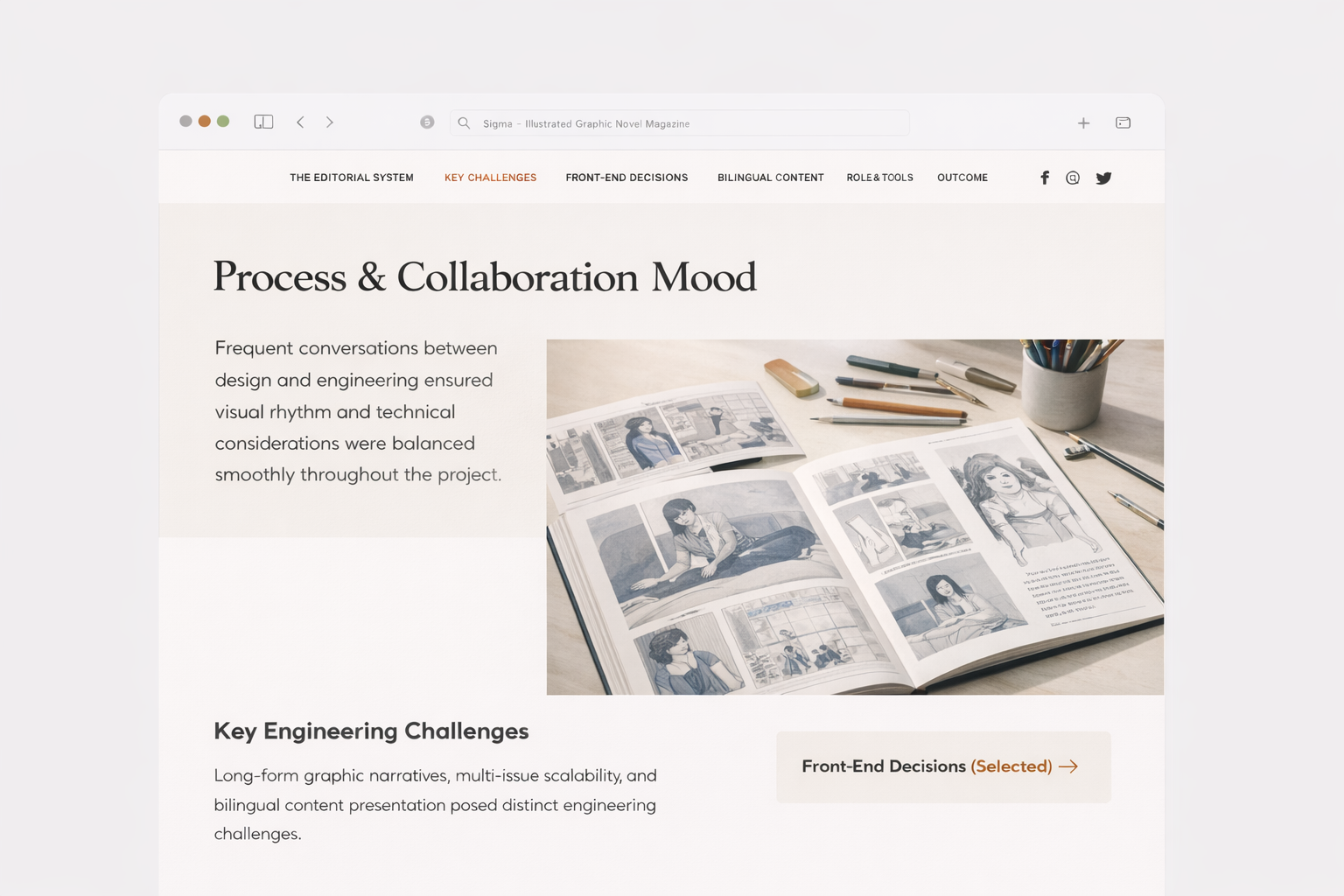
This project relied on continuous collaboration between design and engineering considerations.
Illustration styles, panel density, and reading rhythm were evaluated alongside technical constraints throughout the process. Visual decisions were made with implementation feasibility in mind, reducing the gap between concept and execution.

Role
Front-End Engineer · Product Designer
Tools
HTML / CSS · JavaScript
Editorial layout planning
Cross-device testing (Desktop / Tablet / Mobile)
Sigma demonstrates how a front-end engineering approach can support experimental, creator-led content without sacrificing structure or scalability.
Rather than optimizing for short-term visuals, the system was designed to sustain long-form storytelling over time—allowing creators to focus on narrative while the platform remains stable, flexible, and extensible.