Heart-health wearables have become part of everyday life. They measure heart rate, HRV, sleep, stress, and blood-pressure trends with increasing accuracy.
Yet despite these technical advances, one fundamental gap remains: wearables measure well, but they rarely explain well.
Most users are left with numbers, not understanding. A sudden heart-rate spike appears without context. A low HRV score raises concern without explanation. For many—especially older adults—this ambiguity creates anxiety rather than reassurance.
Clinicians face a parallel challenge. While wearables generate large volumes of data, they rarely provide structured, longitudinal narratives that align with clinical reasoning. Fragmented daily metrics are difficult to use during real medical encounters.
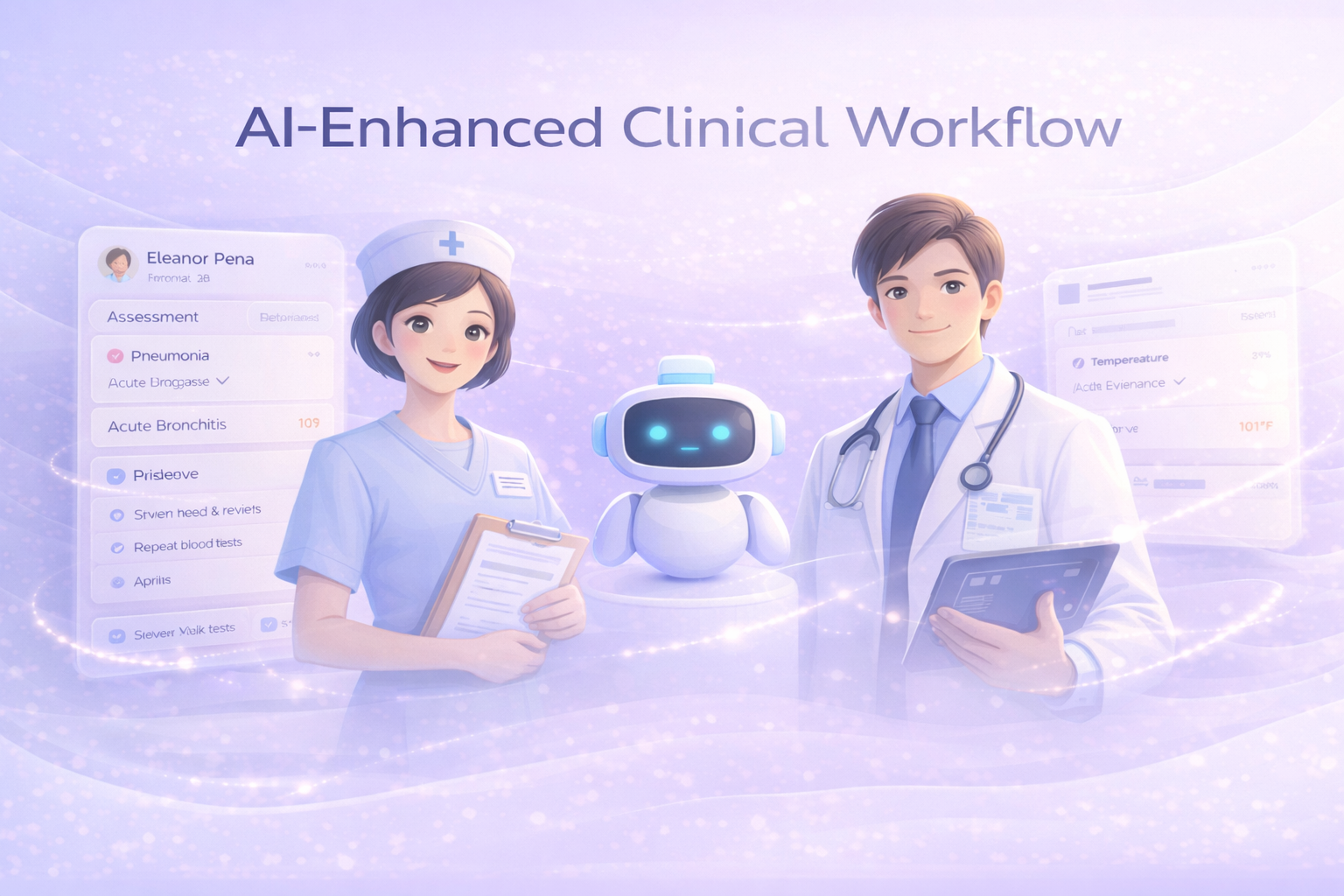
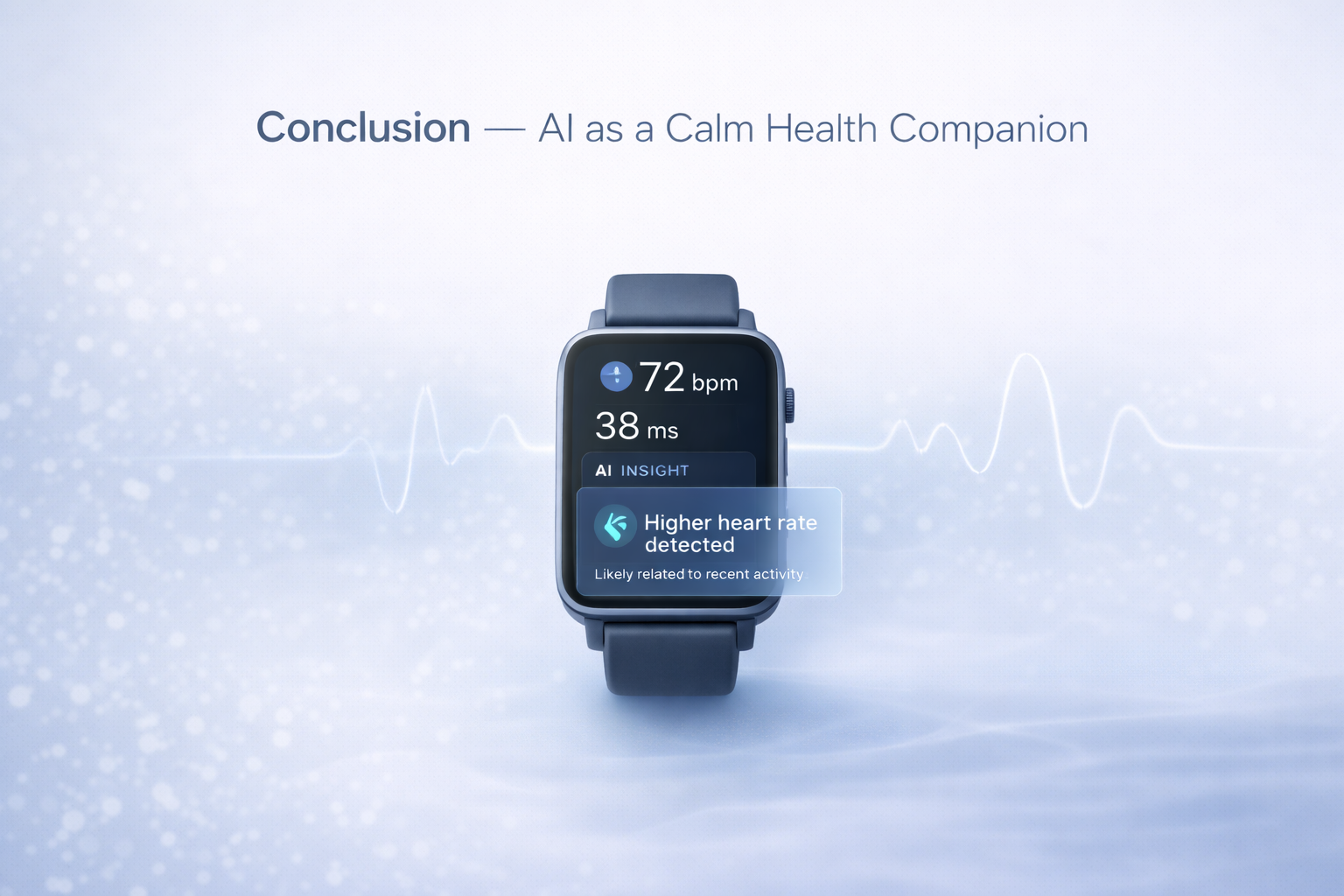
This project explores how AI-enabled wearables could move beyond measurement and become a calm, trustworthy companion for everyday heart health.
This concept proposes a different role for AI in health wearables:
not as a diagnostic authority, but as an interpreter.
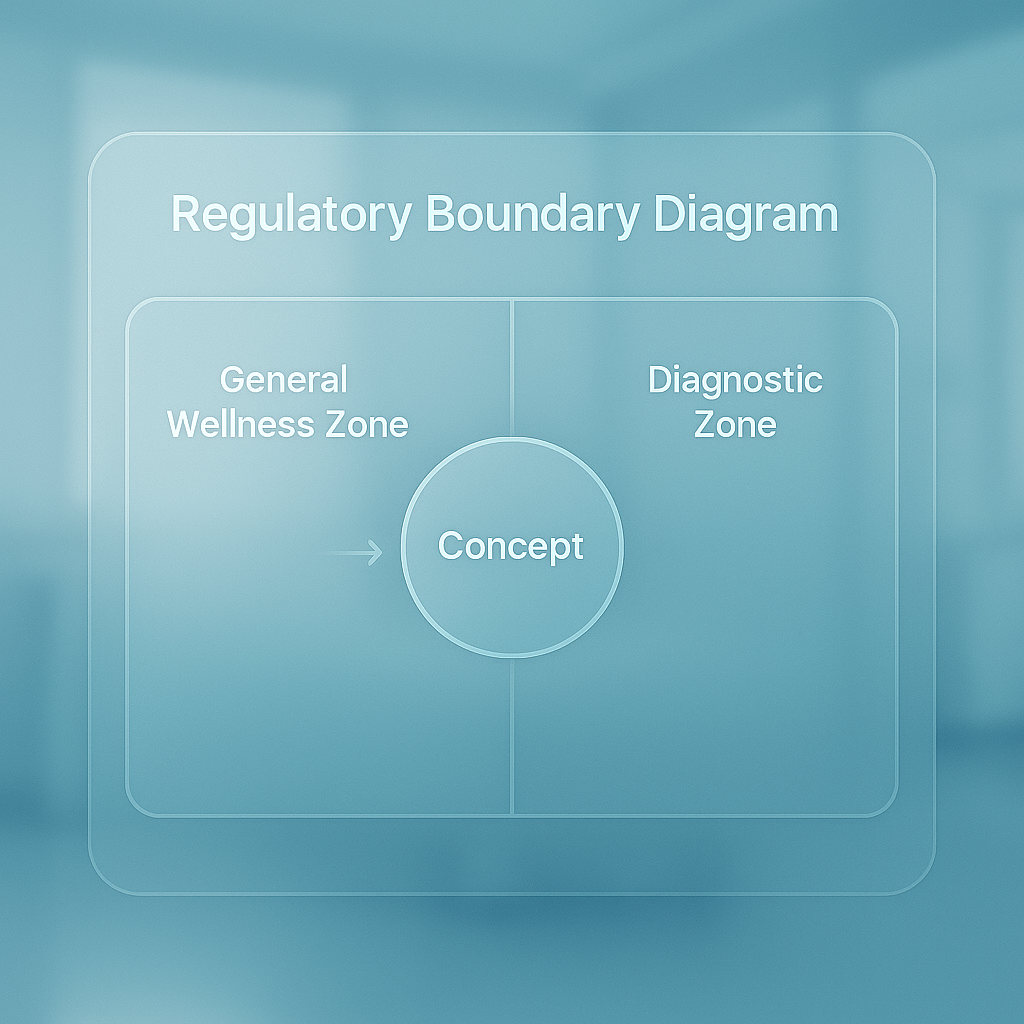
The system translates biosignals into clear, contextual insights that help users understand what is happening—and what they can safely do next—while remaining non-diagnostic, transparent, and aligned with FDA General Wellness principles.
Rather than increasing alerts or medical claims, the focus is on clarity, calm, and trust.
To remain realistic and safe, this exploration intentionally defines clear boundaries.
The concept focuses on cardiac-related wellness signals such as heart rate, HRV, sleep fragmentation, and stress–activity correlations. It explicitly avoids diagnostic interpretation, emergency triage, or predictive medical decision-making.
These constraints are not limitations. They are design decisions that support trust, feasibility, and responsible AI behavior in healthcare contexts.
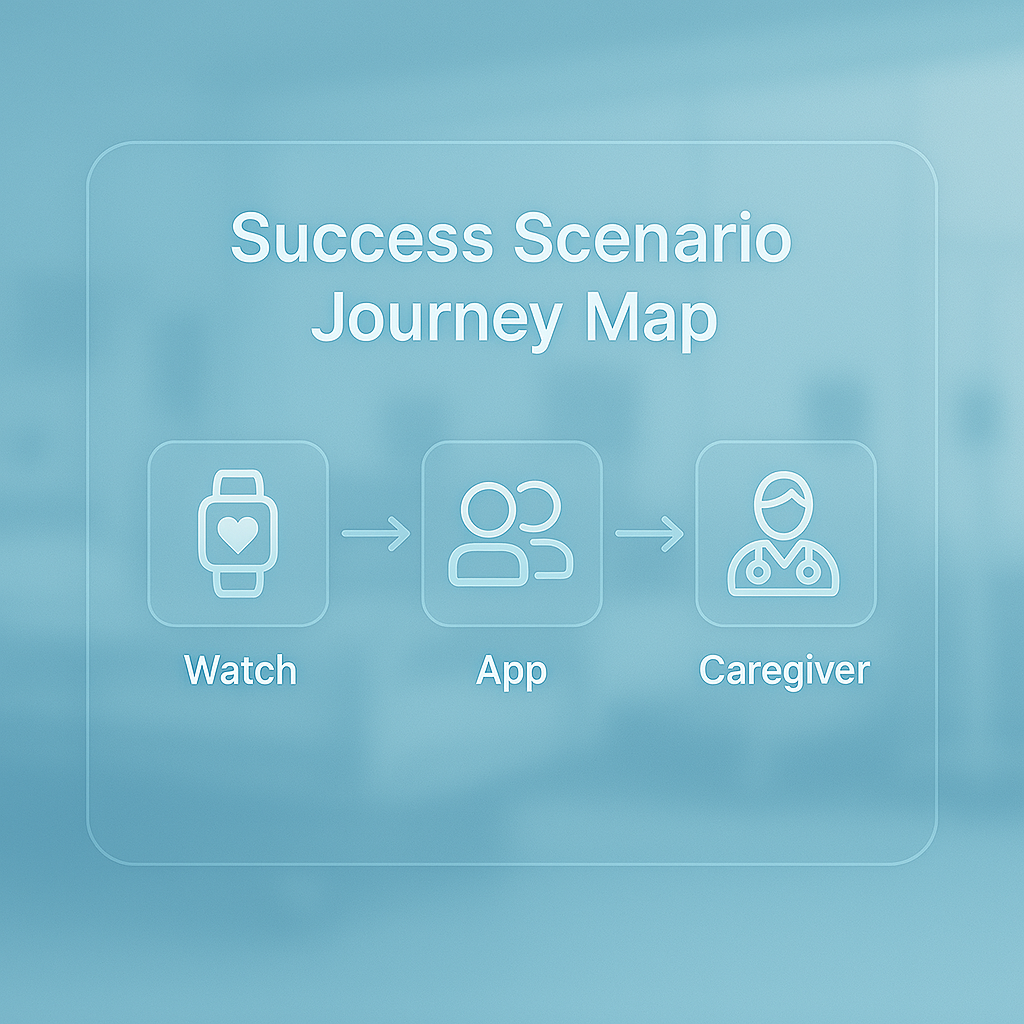
To ground the concept, a success scenario was defined.
A 68-year-old user experiences a gradual decline in nighttime HRV.
Instead of triggering an alarming alert, the system recognizes a pattern: fragmented sleep combined with late evening meals.
The experience unfolds across surfaces:
In this scenario, AI reduces anxiety by providing context without making a diagnosis.
Heart health rarely involves a single person.
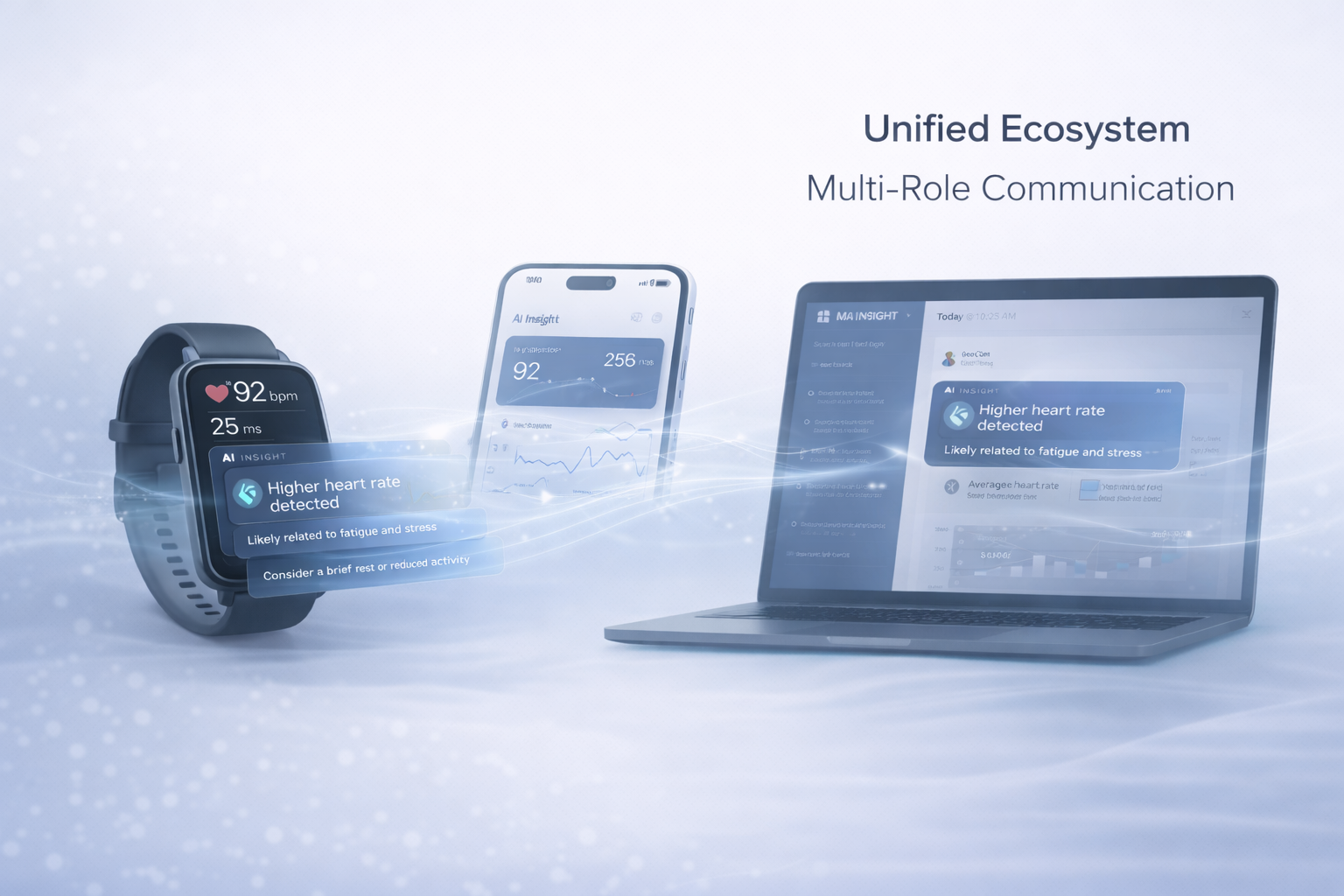
This concept is designed as a multi-role ecosystem supporting three personas:
The system spans three connected surfaces:
Each surface presents the same insight differently, based on role and context.
Several principles guided the experience design:
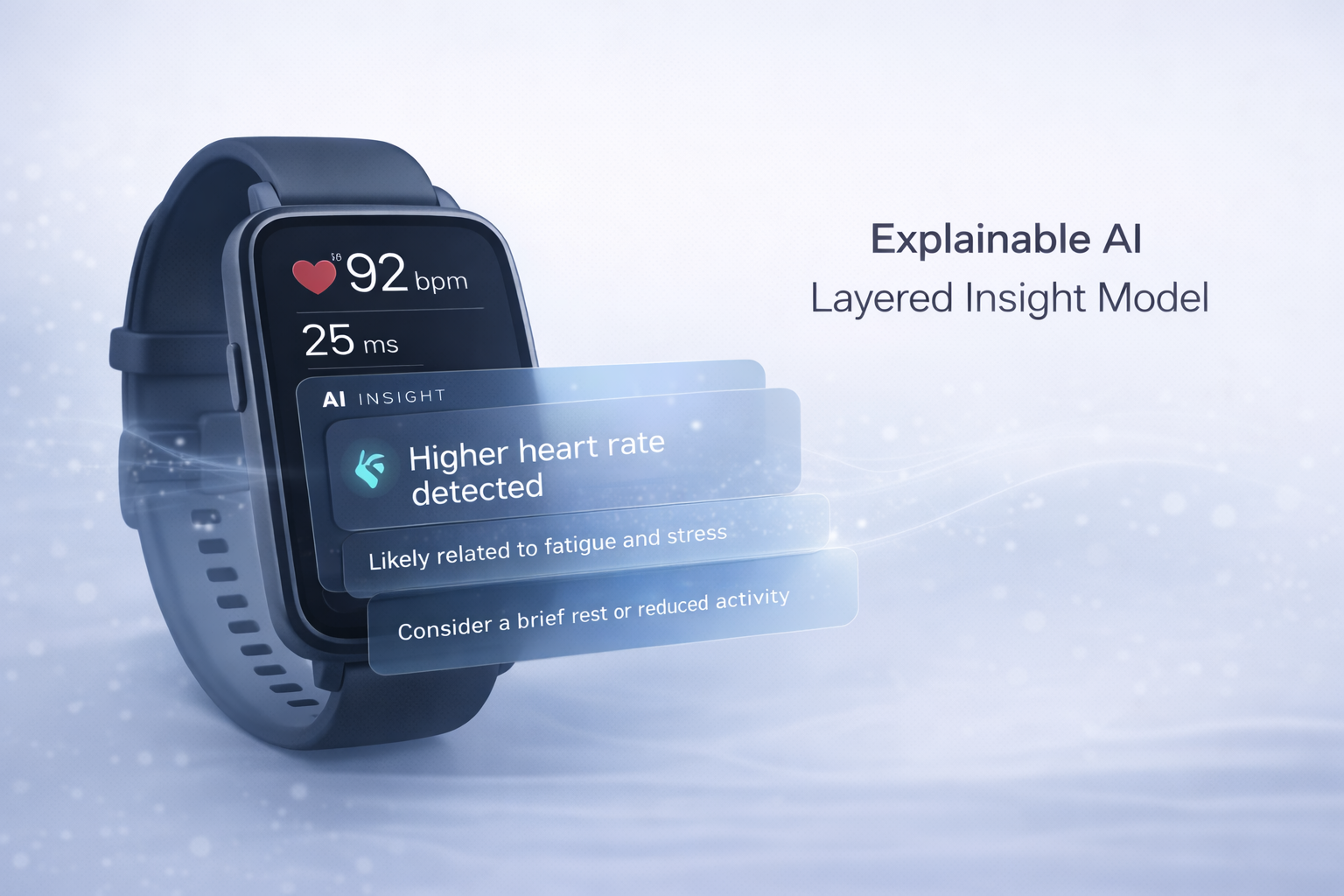
Insights are layered rather than absolute.
Explanations focus on “what happened,” “why it likely happened,” and “what you can do next.”
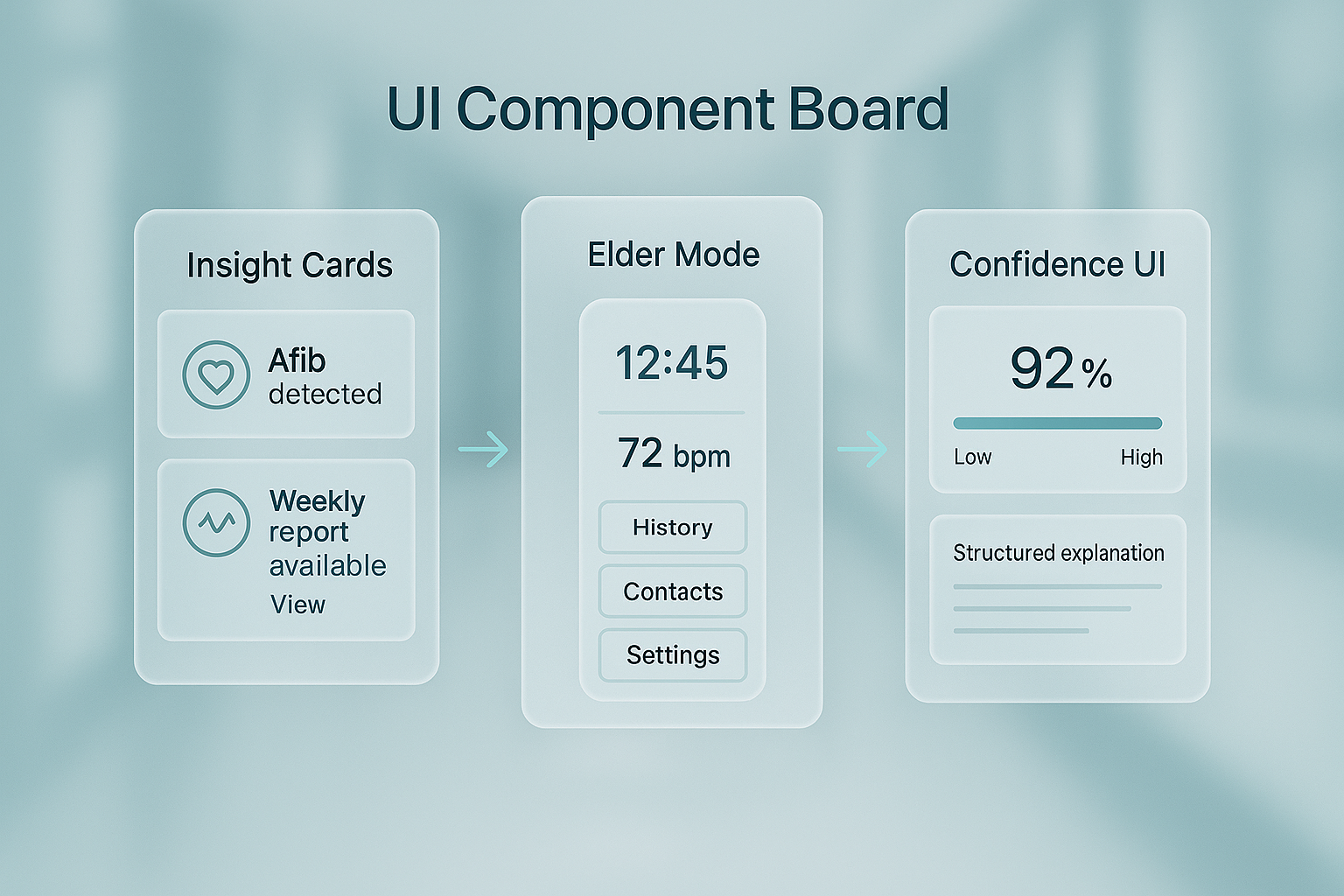
Senior-friendly interactions prioritize readability, predictable pacing, and low-anxiety microcopy.
AI behavior remains transparent, conservative, and consistent across all surfaces.
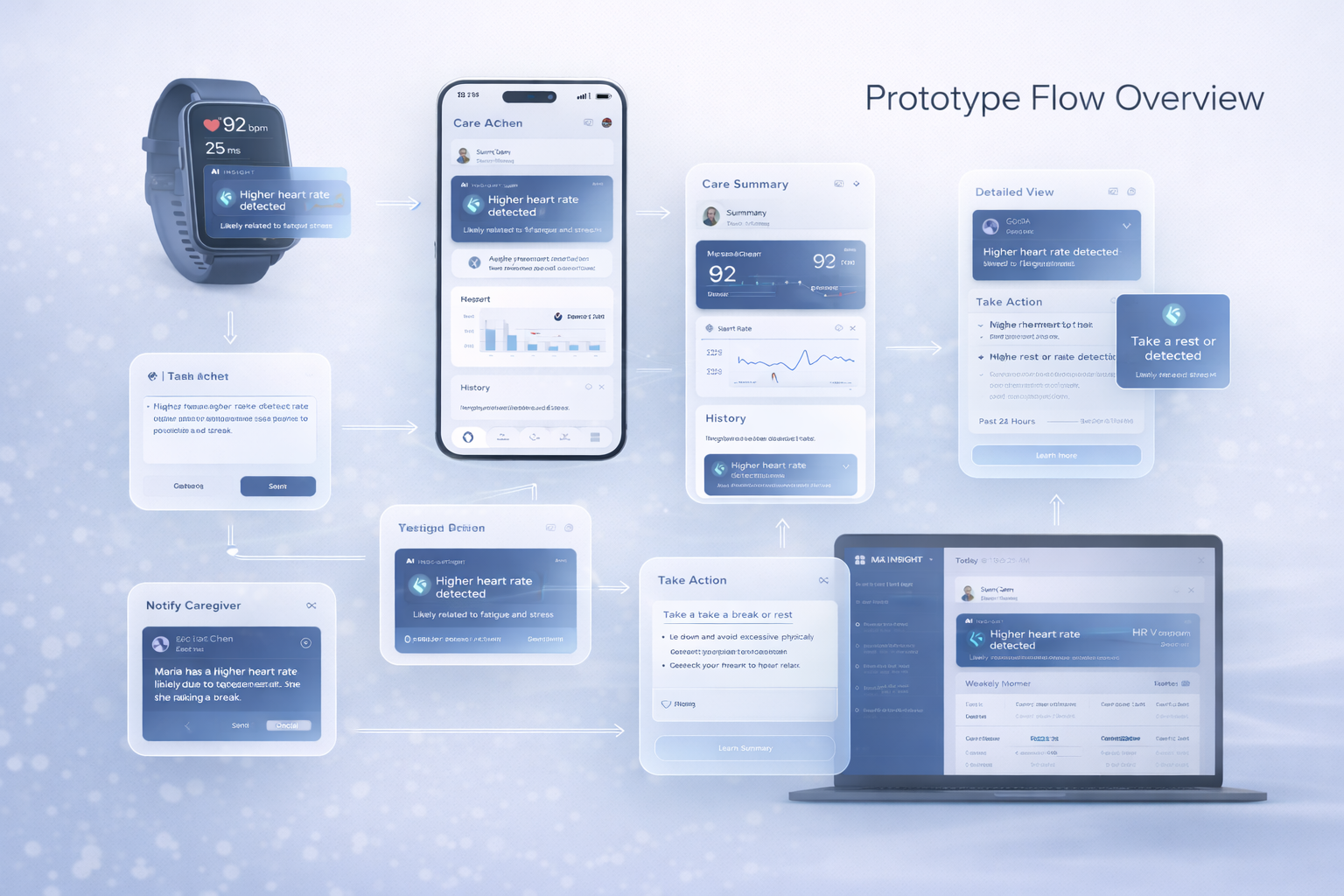
To demonstrate the experience, selected high-fidelity screens illustrate how the system works across devices.
These include insight cards on the watch, trend-based dashboards on mobile, simplified caregiver summaries, and structured clinician timelines aligned with longitudinal review.
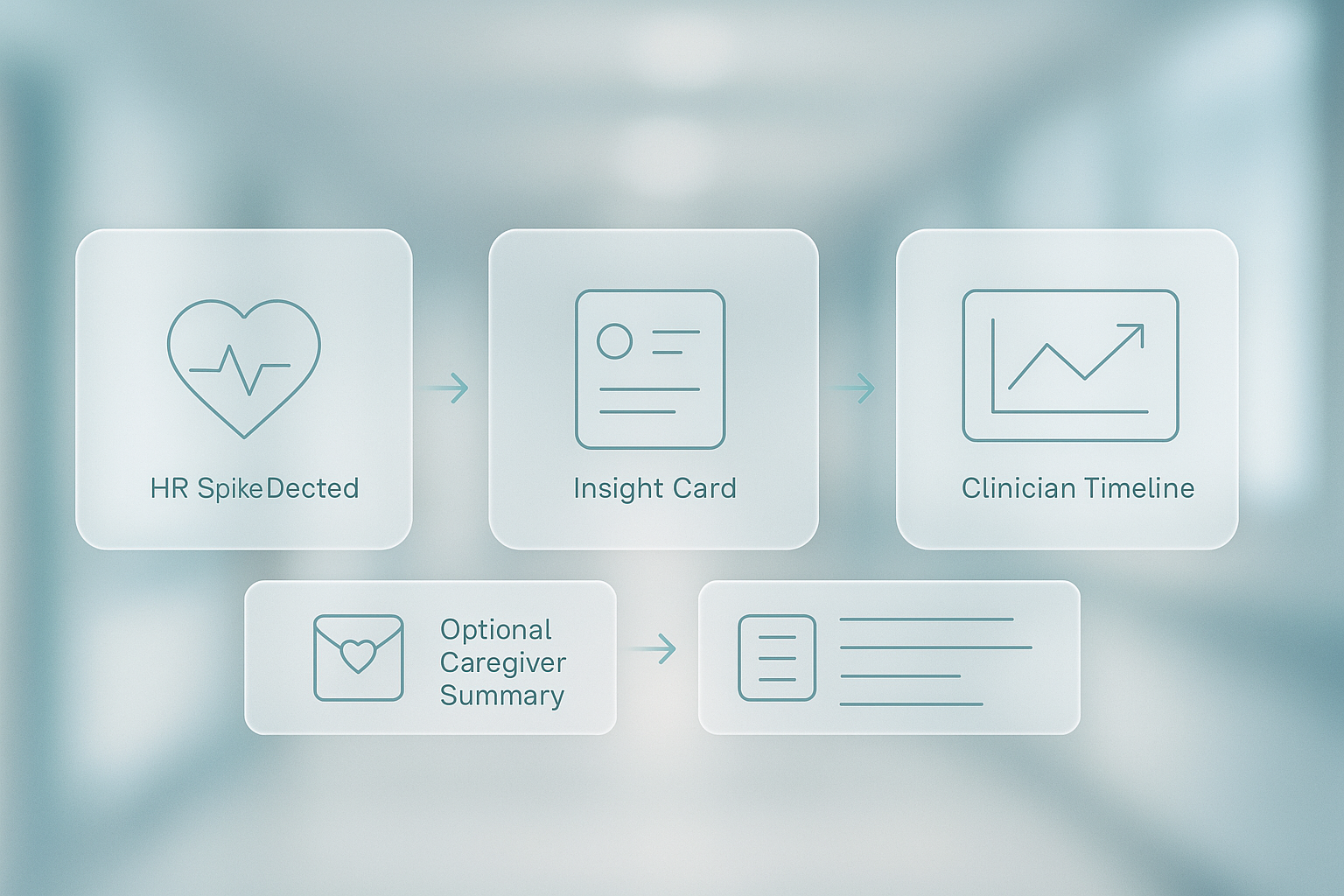
A representative prototype flow demonstrates how a heart-rate event becomes an interpretable insight, routes appropriately to caregivers when needed, and contributes to structured clinical understanding over time.
Although this is a concept project, success metrics were defined to guide future validation.
The experience aims to improve comprehension, reduce anxiety for users, and decrease review time for clinicians by presenting information in structured, contextual narratives.
Designing for heart health requires more than accurate sensors.
It requires empathy for user anxiety, literacy in clinical reasoning, responsible AI behavior, and thoughtful multi-role communication.
This is a self-initiated concept project inspired by the consumer VivoWatch 6.
All interfaces shown are speculative redesigns created for exploration purposes and do not represent ASUS’ official product.
It is not an approved medical device and is not intended for diagnostic use.
All data, AI behaviors, and interfaces shown are fictional explorations illustrating responsible, user-centered health technology.