In emergency departments, time is not an abstract constraint—it directly shapes clinical outcomes.
Every second spent navigating tools is a second taken away from patient care.
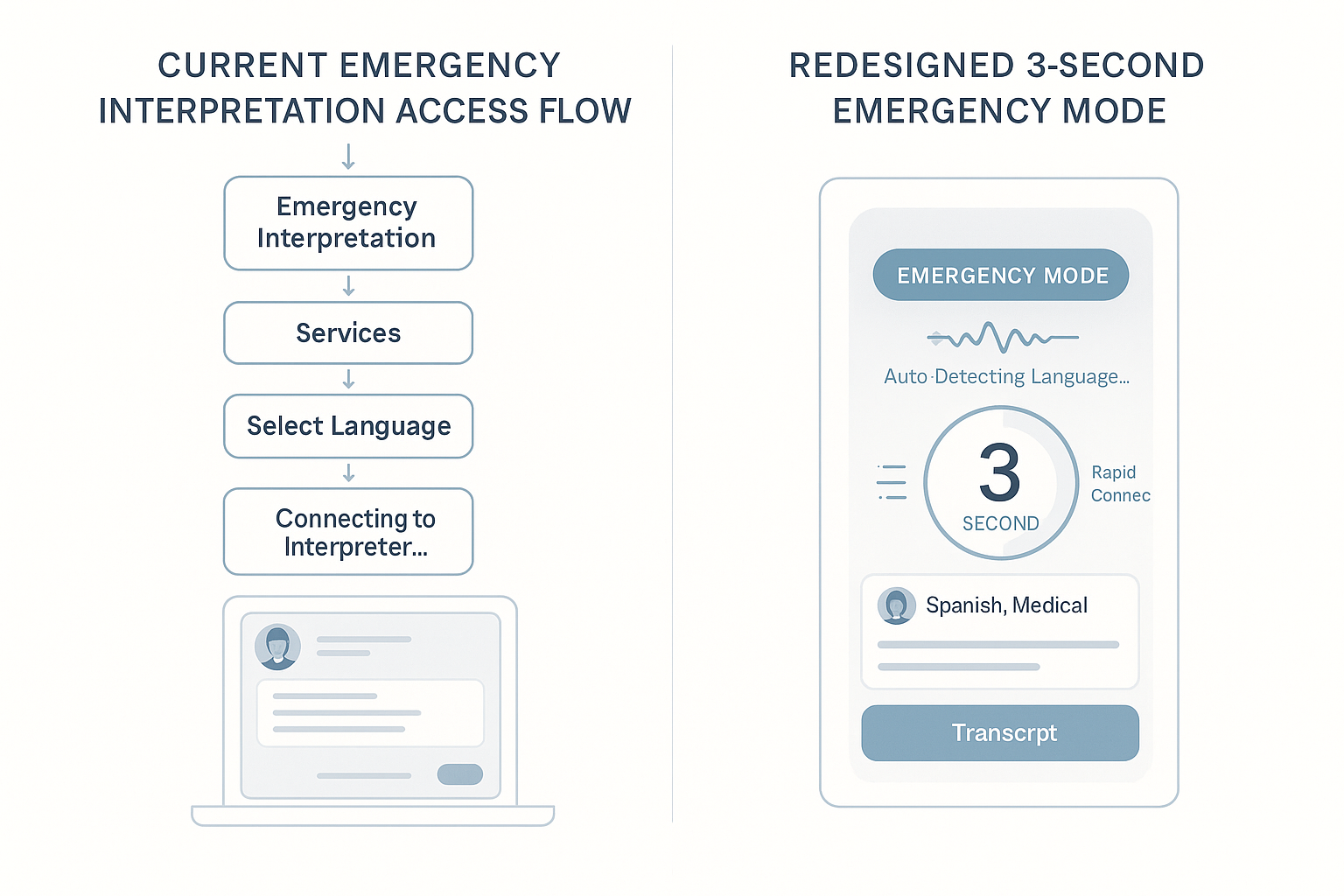
When clinicians encounter patients who speak limited English, interpretation should act as an immediate bridge. In reality, it often becomes an obstacle. Even with established services like LanguageLine, clinicians must navigate menus, select languages, and wait for connection—while simultaneously stabilizing patients, managing pain, and coordinating care teams.
This project explores a critical question:
What would medical interpretation look like if it truly respected the speed, pressure, and cognitive demands of emergency care?
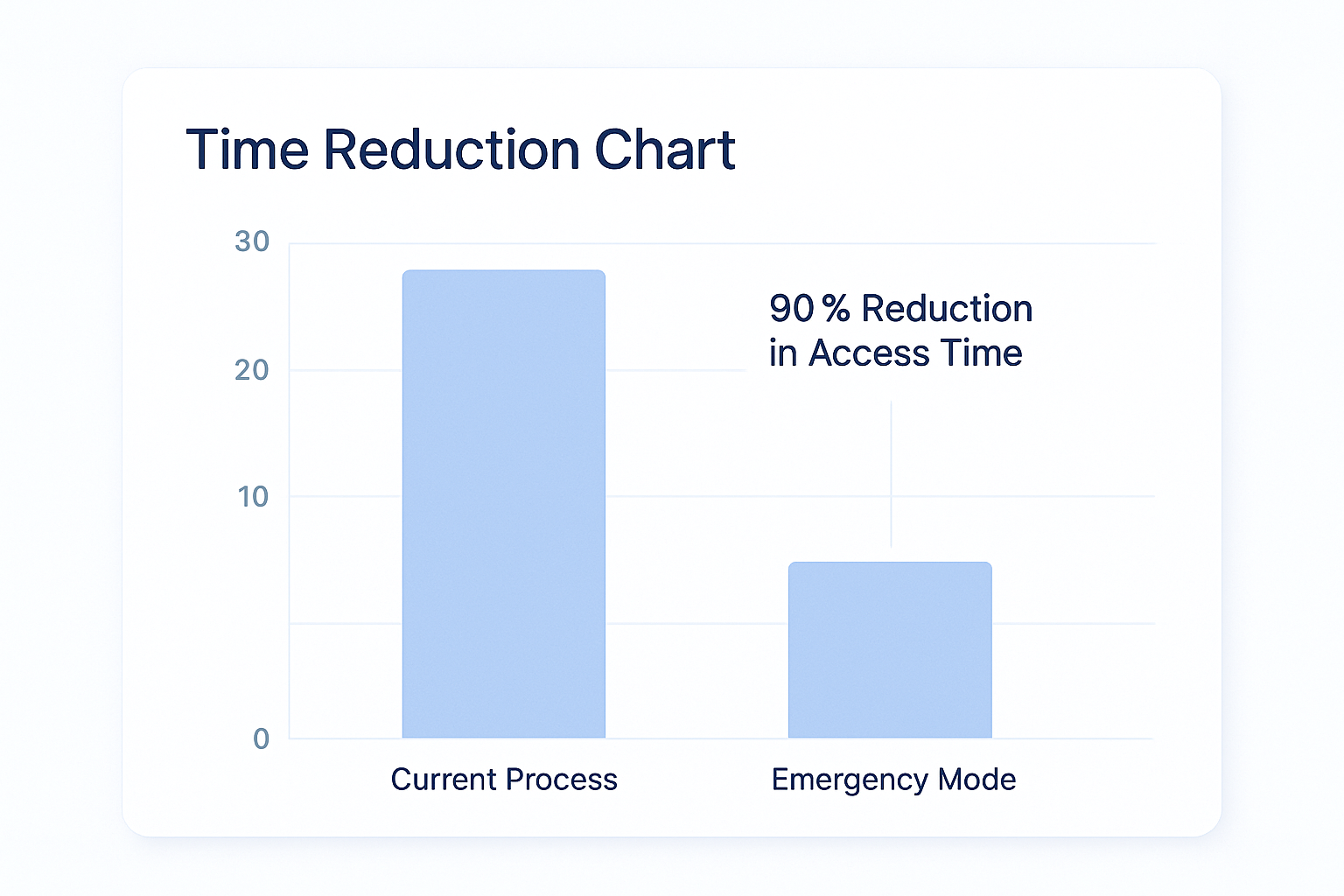
The Emergency Mode concept reframes interpretation as a 3-second, one-gesture action—accessible instantly, even in hands-busy, high-acuity situations.
It is not a visual refresh, but a rethinking of how essential language support should enter the clinical environment: fast, safe, and interruption-free.
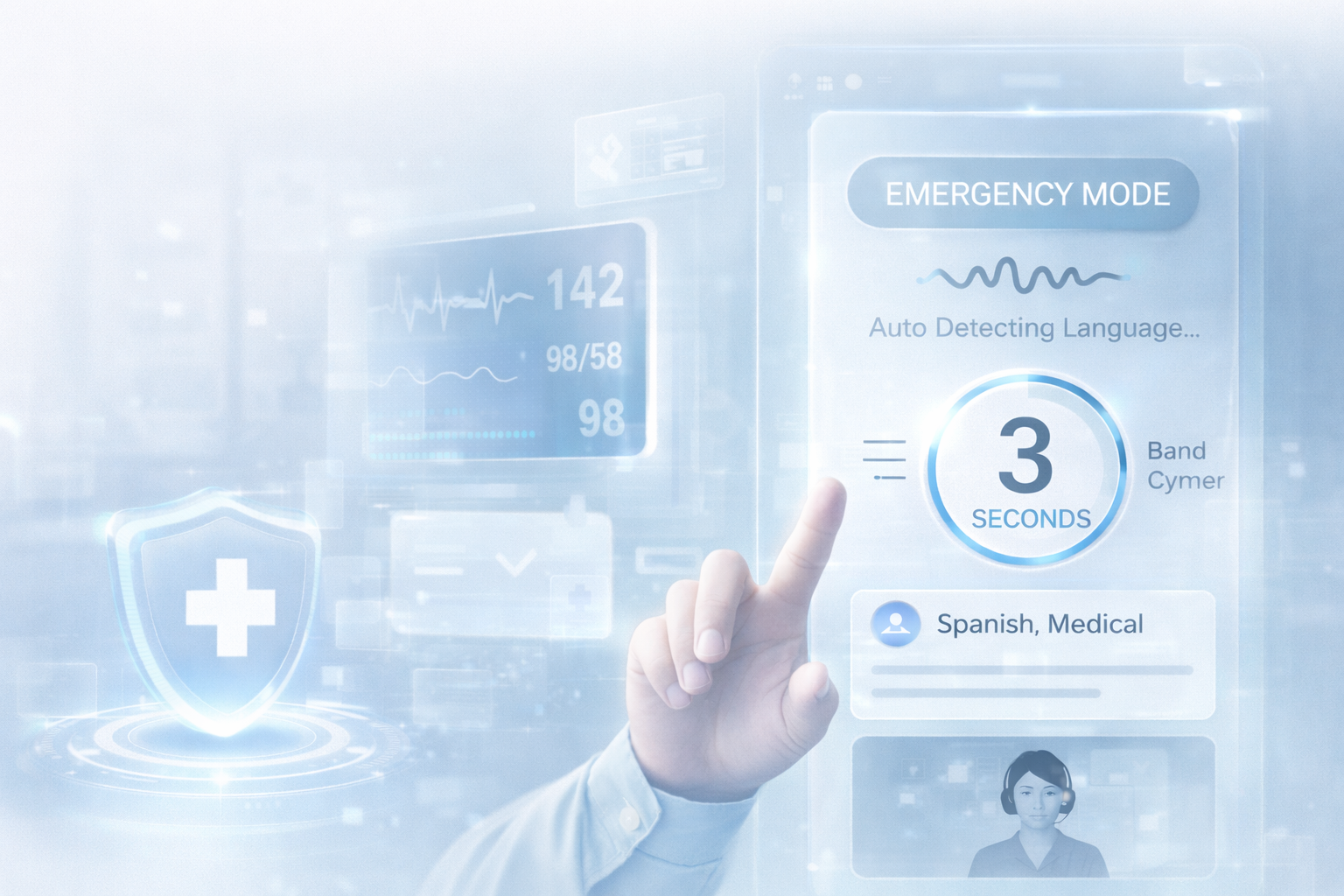
I led this redesign from a product and workflow perspective, focusing on how interpretation could realistically fit into emergency medicine.
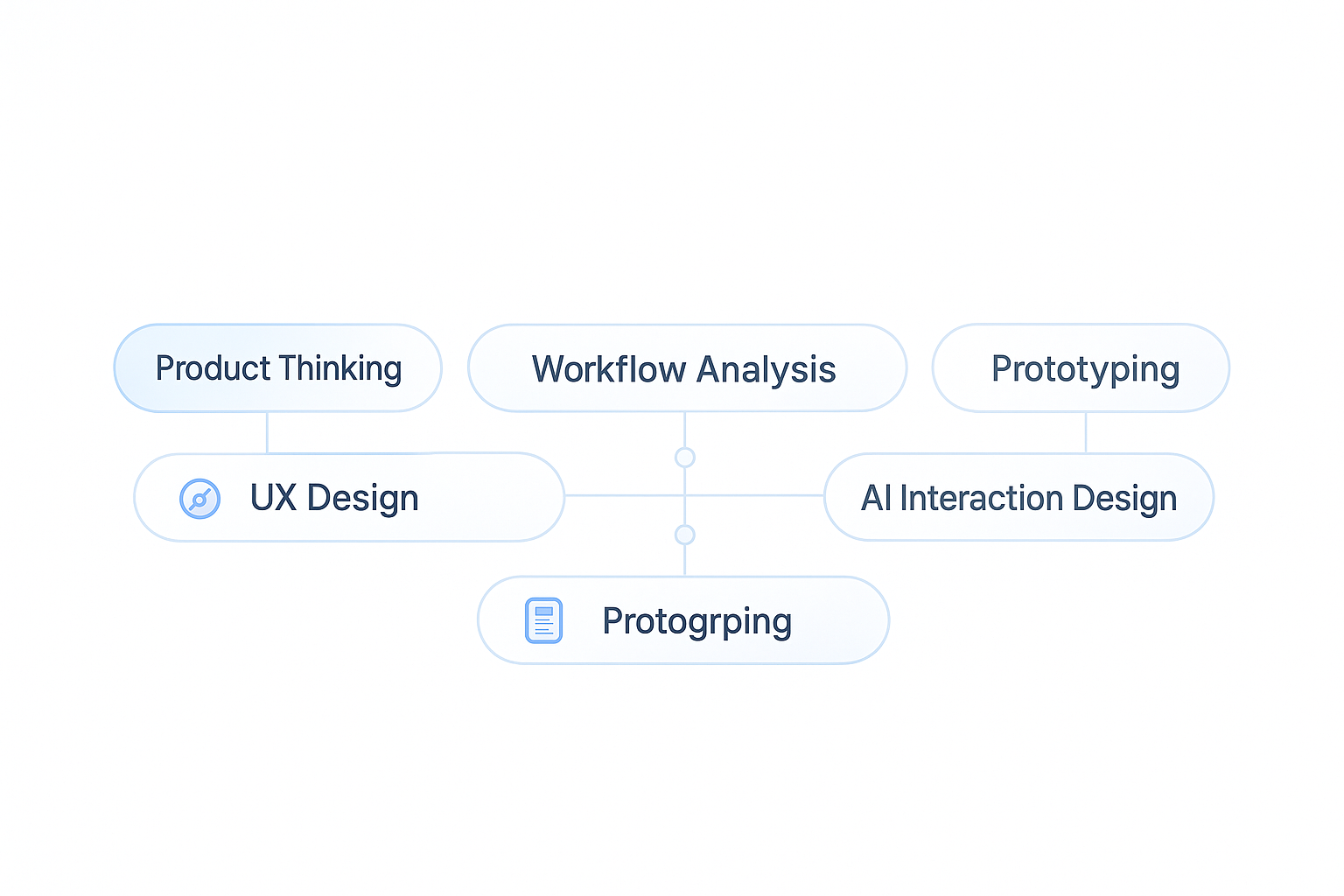
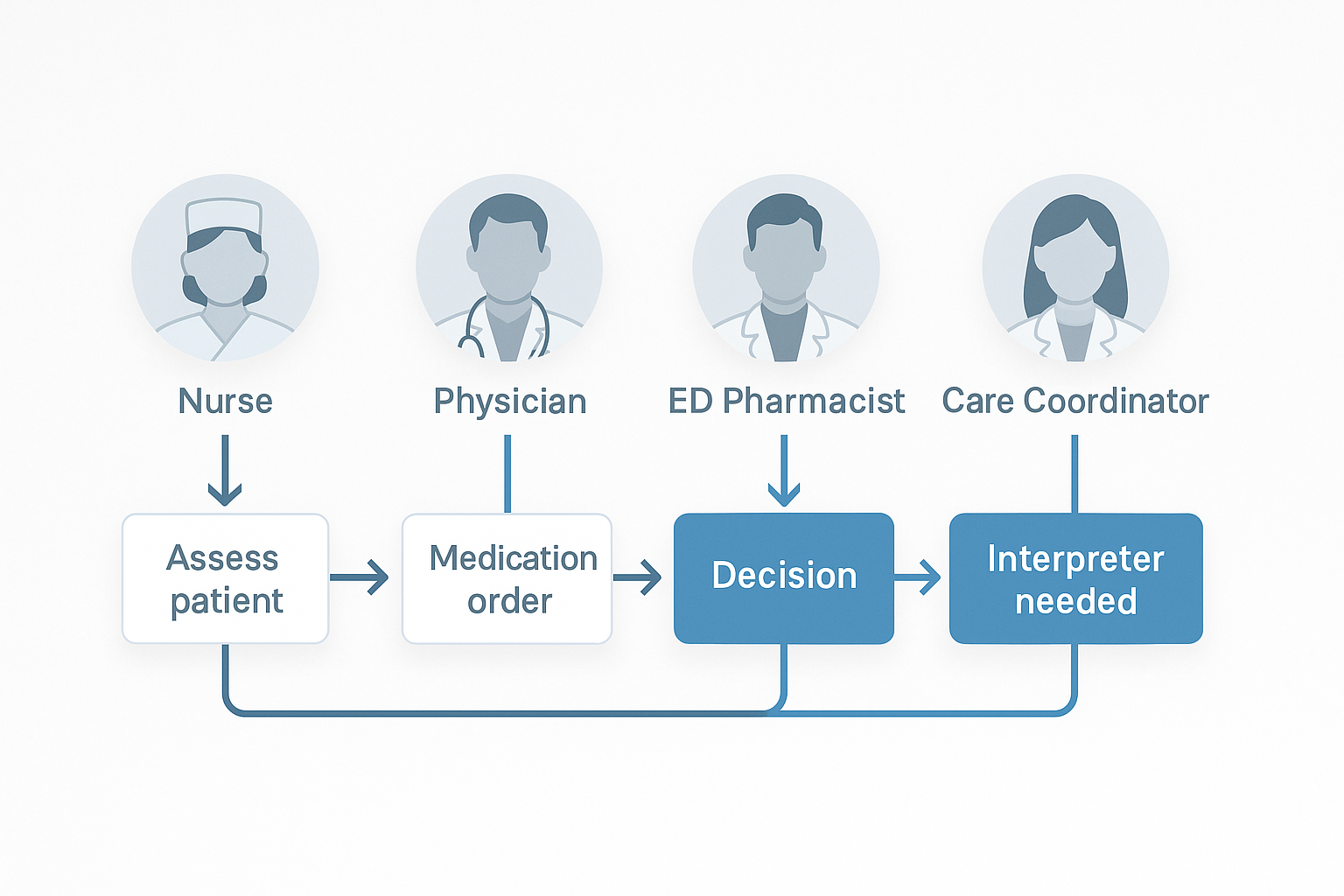
My work spanned clinical workflow analysis, interaction design, AI behavior modeling, and high-fidelity prototyping, with a consistent focus on reducing cognitive load under pressure and aligning technology with real emergency room constraints.
Emergency departments operate under constant strain: rising patient volumes, time-sensitive decisions, and relentless task-switching.
When patients cannot communicate clearly, clinicians must access interpretation support immediately. Yet many existing solutions reflect enterprise assumptions rather than emergency realities—introducing delays, complexity, and unnecessary decision points in moments where seconds matter.
This redesign explores how interpretation can shift from a tool clinicians must consciously reach for into a seamless extension of emergency care itself.
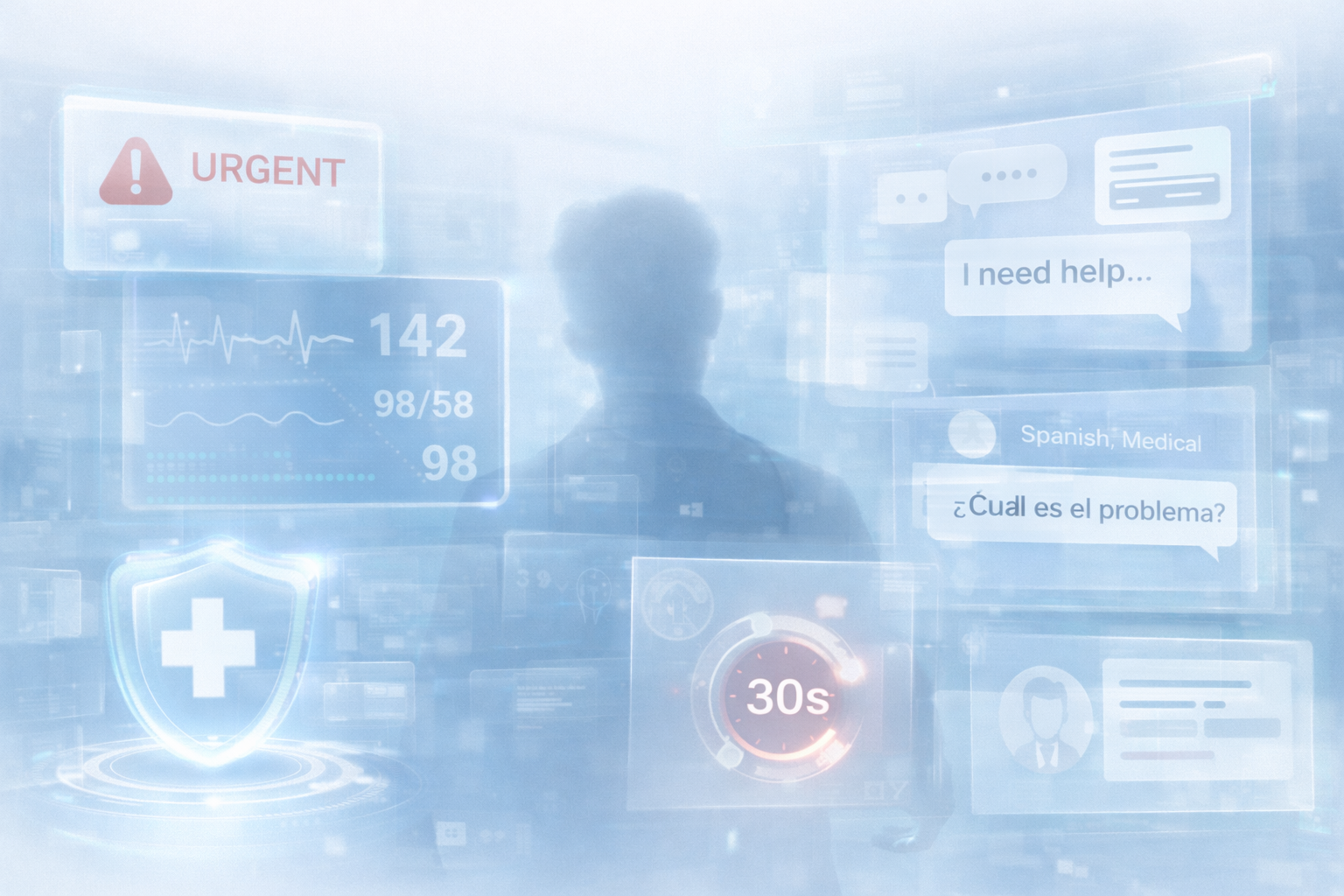
LanguageLine Solutions is the largest medical interpretation provider in the United States, supporting over 240 languages across healthcare settings.
This project does not challenge the value of human interpreters. Instead, it focuses on how interpretation access is structured, particularly in high-acuity environments where speed, clarity, and continuity are critical. Emergency Mode rethinks interpretation as an operational layer within emergency care, rather than a separate service clinicians must navigate.
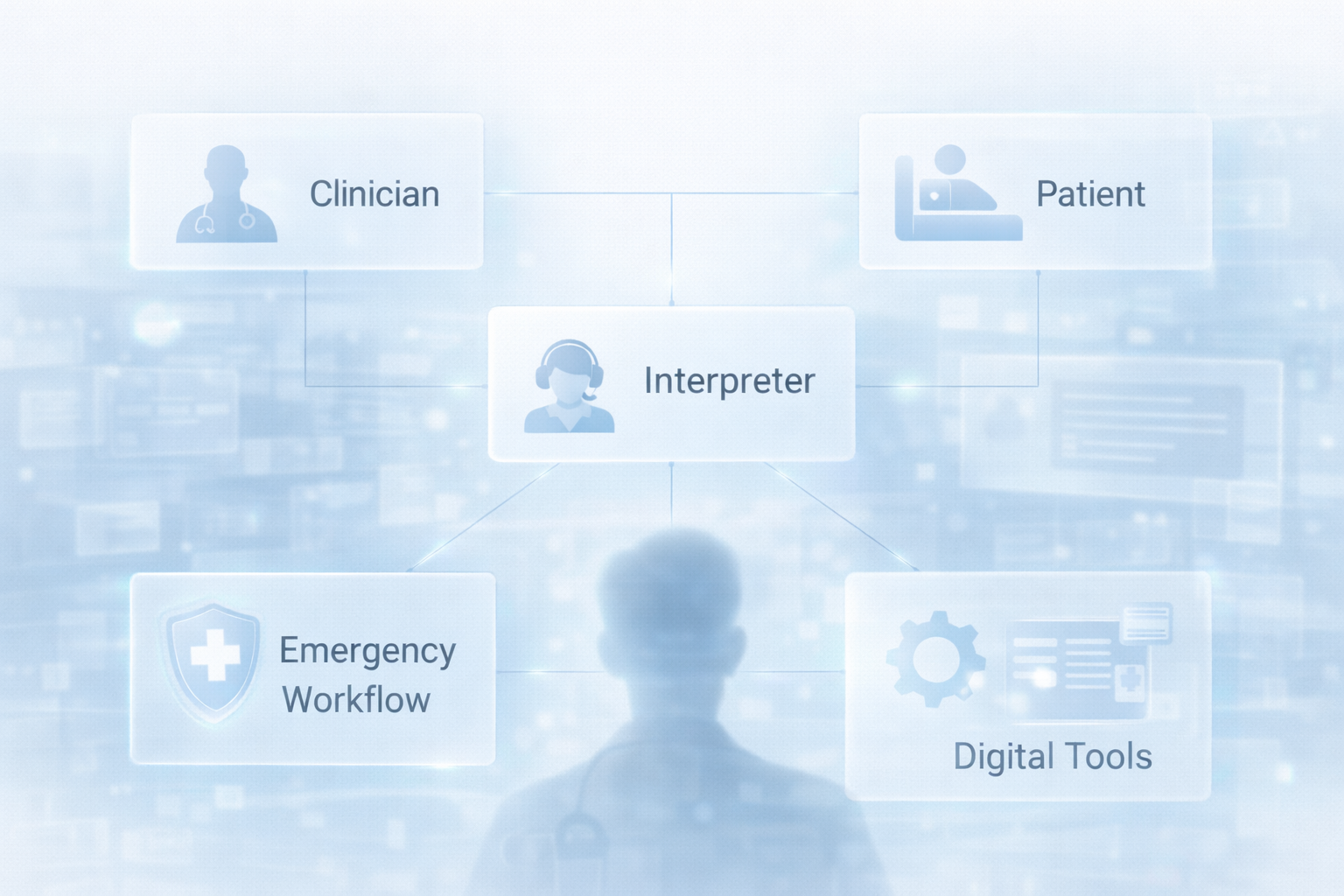
Emergency care is chaotic by design. Clinicians operate amid alarms, vital signs, team movement, and constant decision-making—often with one hand on the patient.
Workflow analysis revealed that interpretation access frequently adds friction instead of relief. Interfaces assume time, attention, and fine motor control—conditions that rarely exist in emergency settings. Interpreter specialization is often invisible until connection, and continuity breaks down as patients move between staff.
The insight was clear:
Interpretation must be as fast, automatic, and context-aware as emergency equipment turning on.
The core design question became:How might we deliver clinically accurate interpretation in under three seconds, without adding cognitive burden?
Emergency Mode was defined around a single principle:
remove friction without removing safety—by prioritizing speed, clarity, and workflow continuity at the moment of care.
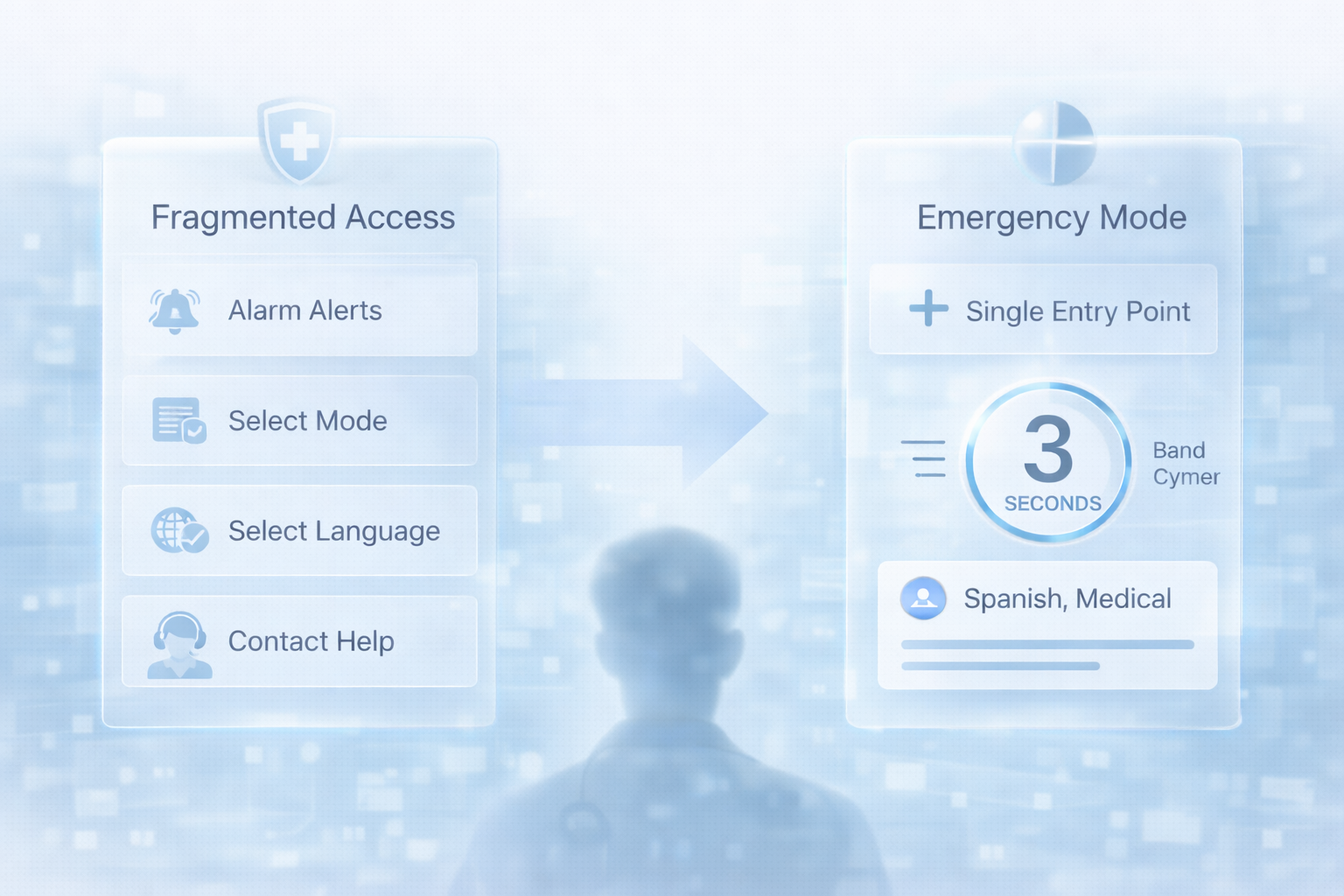
Emergency Mode introduces a simplified, emergency-grade access model:
Together, these elements transform interpretation from a secondary task into a workflow-critical capability.
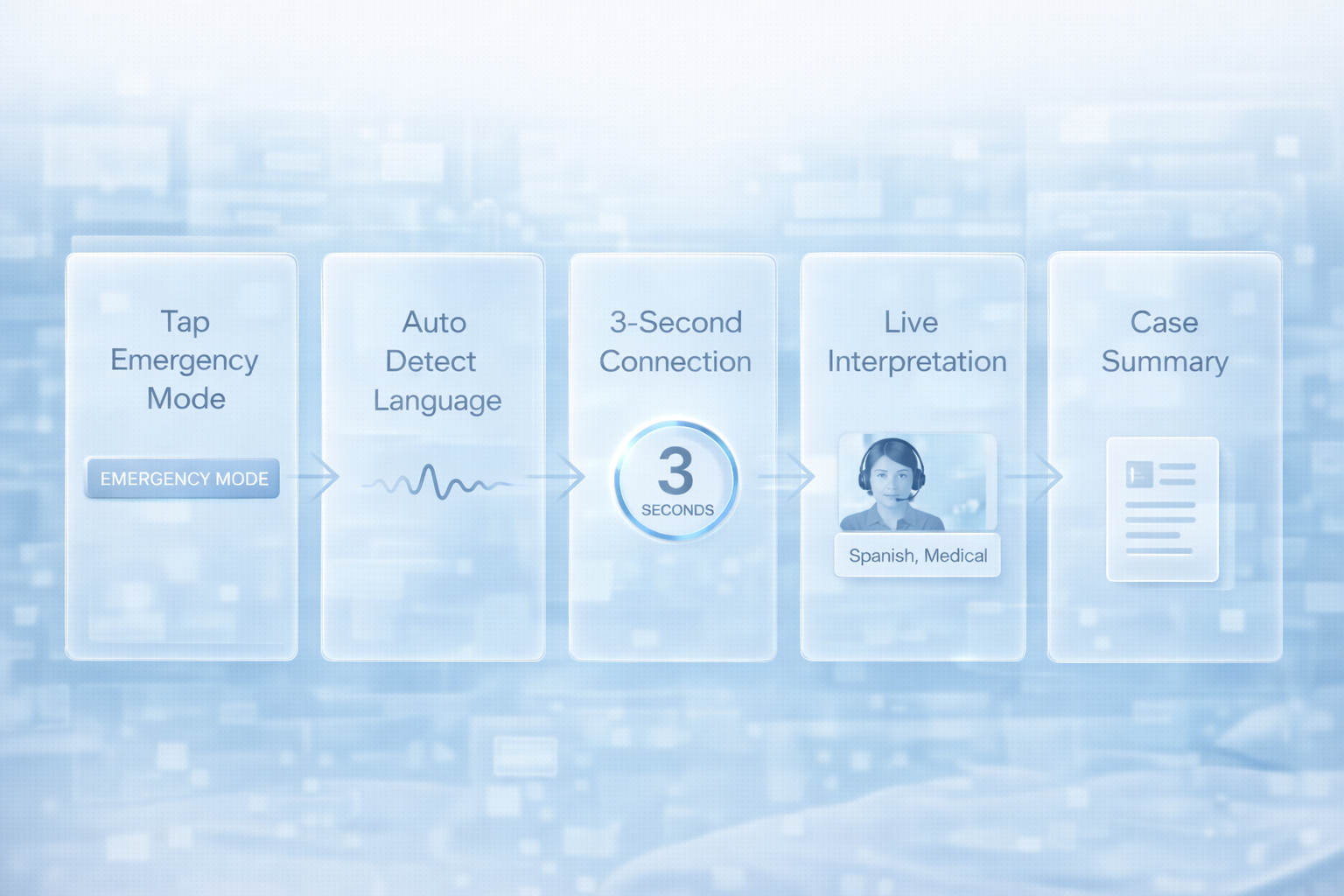
The redesigned workflow follows a natural emergency rhythm:
A clinician activates Emergency Mode →
Language is detected in real time →
An appropriately specialized interpreter is connected →
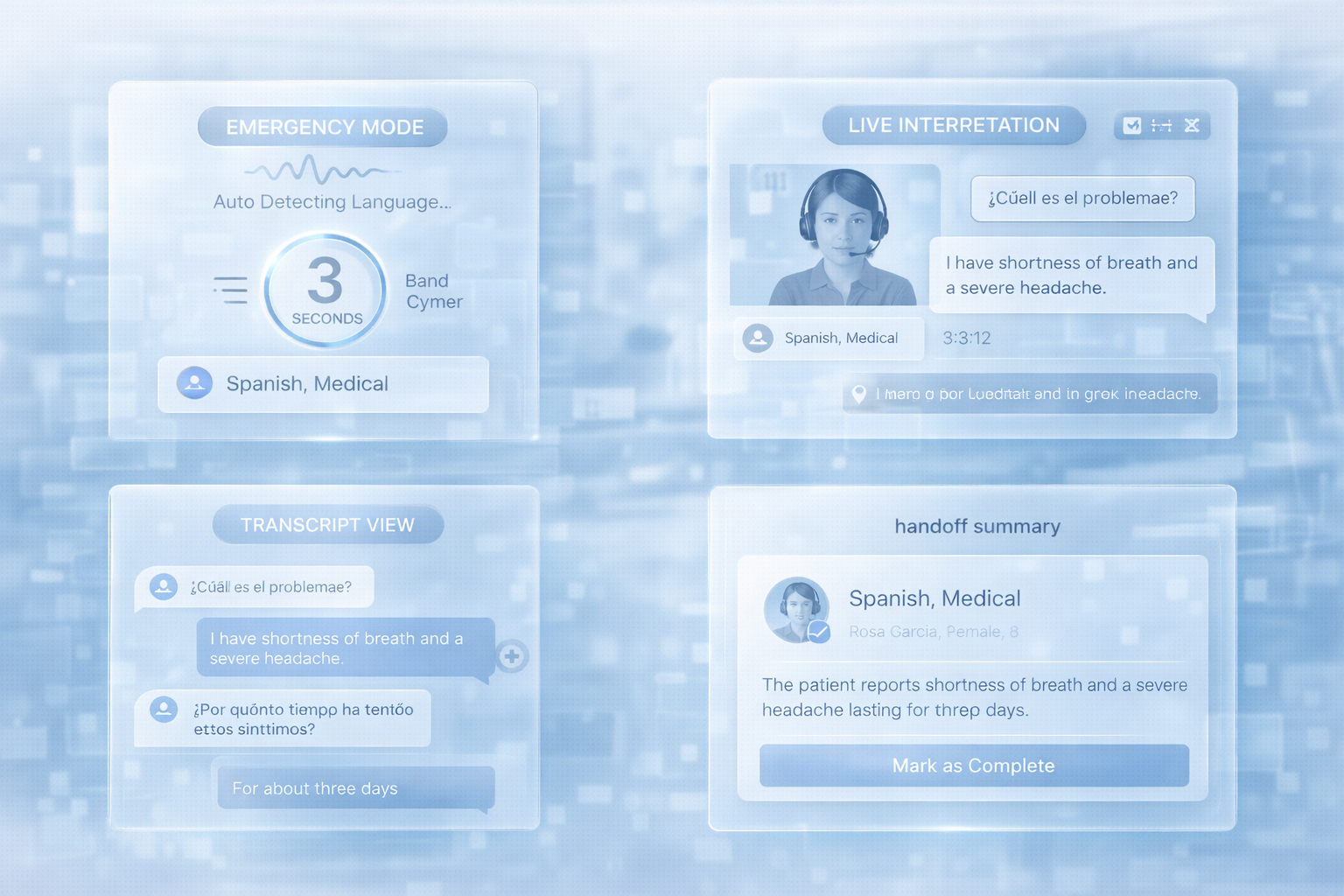
Live interpretation and transcript support begin →
A session summary attaches to the patient case for continuity.
The flow supports care delivery rather than interrupting it.
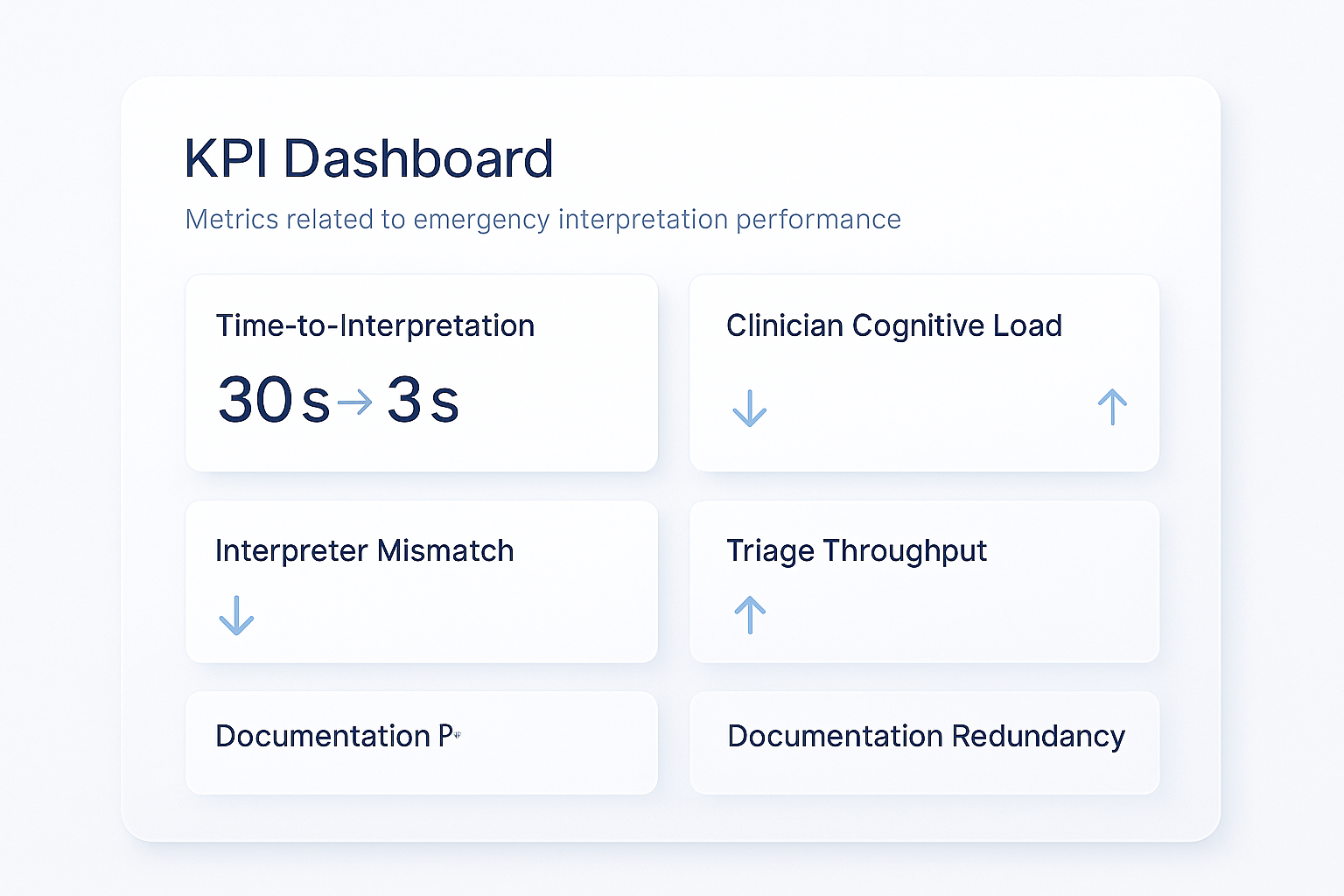
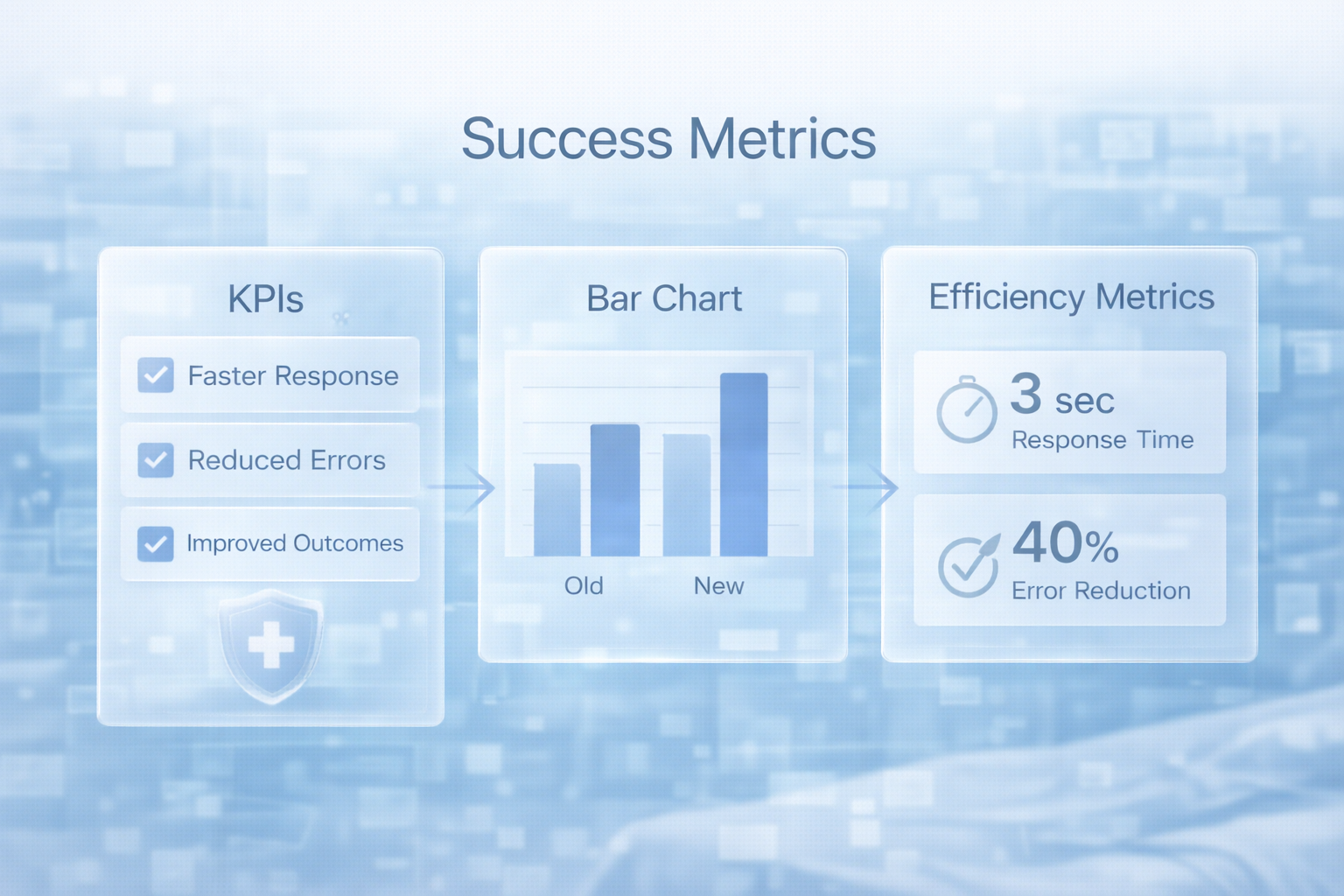
Although conceptual, the redesign is oriented around measurable impact:
Emergency Mode reframes interpretation from a standalone service into an integrated element of emergency care.
By respecting emergency pace, reducing cognitive load, and supporting team-based workflows, interpretation becomes not a delay—but a catalyst for faster, safer clinical decisions.
When technology aligns with the realities of frontline medicine, it stops demanding attention and starts offering support.
This project is an independent conceptual redesign created for educational and portfolio purposes only.
It is not affiliated with LanguageLine Solutions and does not reflect proprietary workflows or operational systems.
All interfaces and scenarios are fictional and intended to explore responsible, human-centered interpretation support in emergency environments.