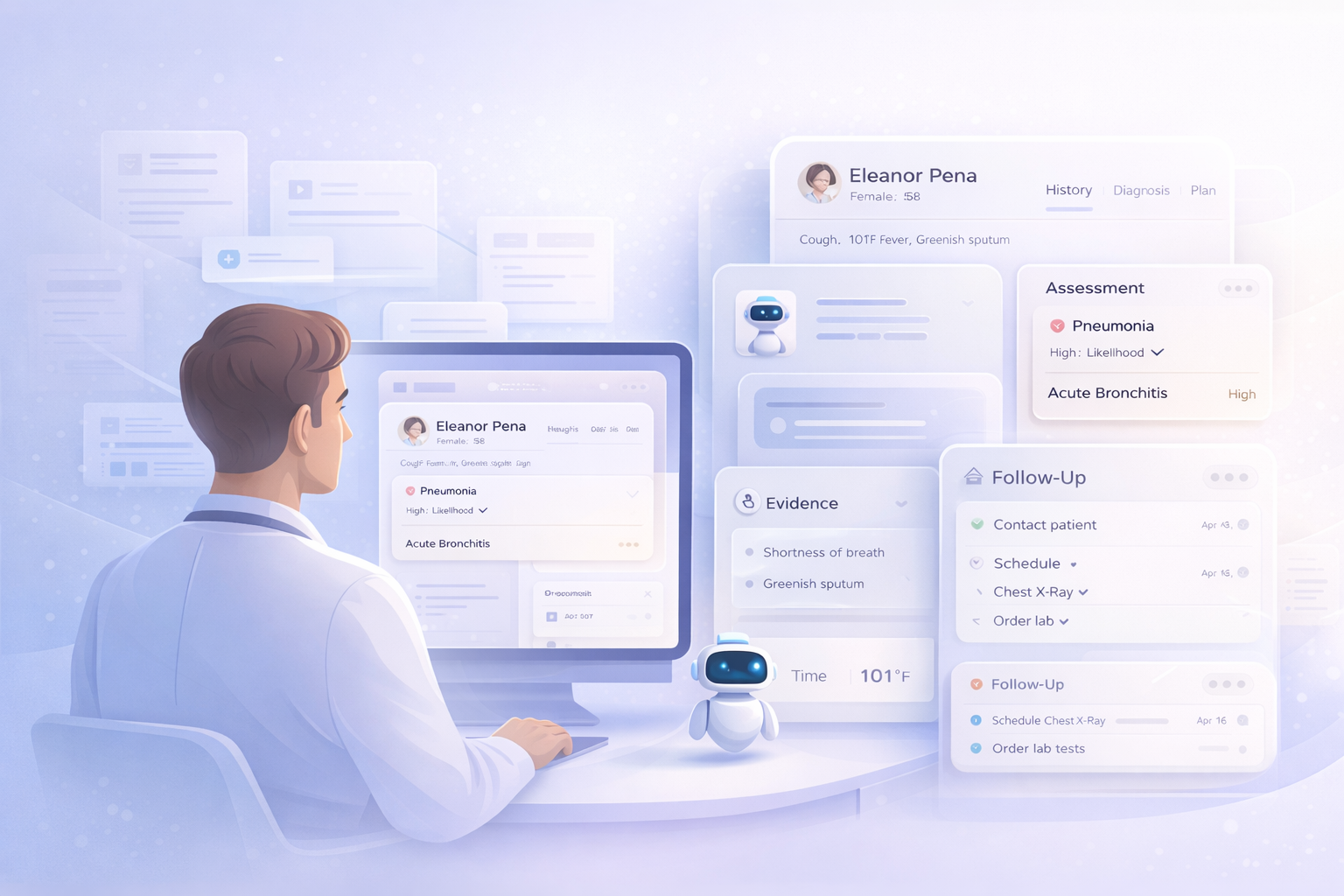
Clinicians today work under extraordinary pressure.
Documentation demands are rising, digital tools remain fragmented, and patient cases are increasingly complex. While healthcare systems generate more data than ever, clinicians have less time to interpret it meaningfully.
Quadrivia AI’s assistant, Qu, was created to help reduce this burden. Early versions showed real promise in interpreting patient histories and surfacing risks. However, a critical insight emerged:
AI can only reduce cognitive load if it understands how clinicians actually think and work.
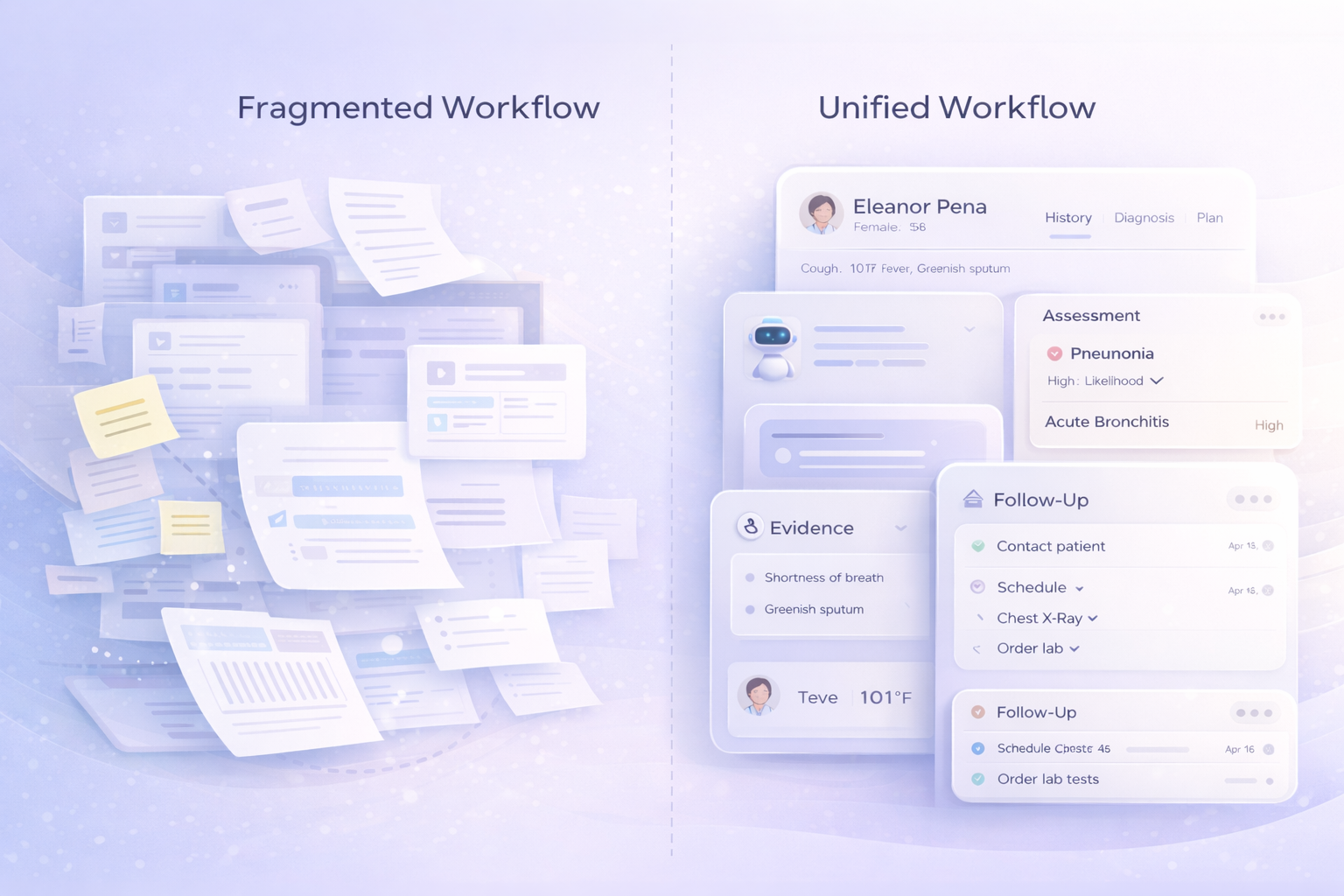
In practice, Qu’s summaries lacked clinical hierarchy, its reasoning was difficult to trace, and it offered limited support for team-based workflows across nurses, physicians, and care coordinators. Rather than reducing friction, the system sometimes introduced new cognitive overhead.
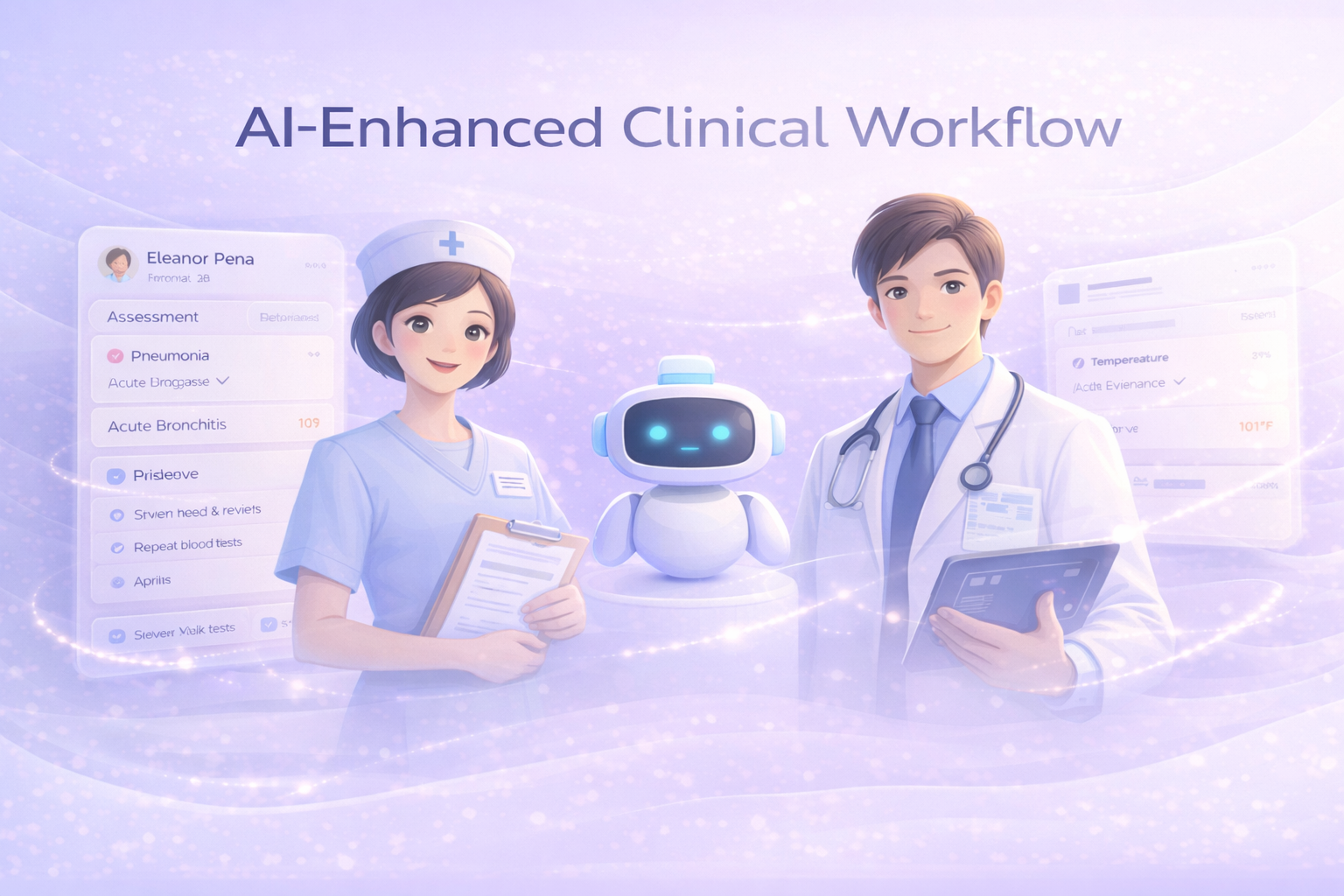
This redesign explores how Qu could evolve into a clinical-grade workflow partner—one that clarifies rather than overwhelms, accelerates rather than interrupts, and strengthens collaboration rather than fragmenting it.
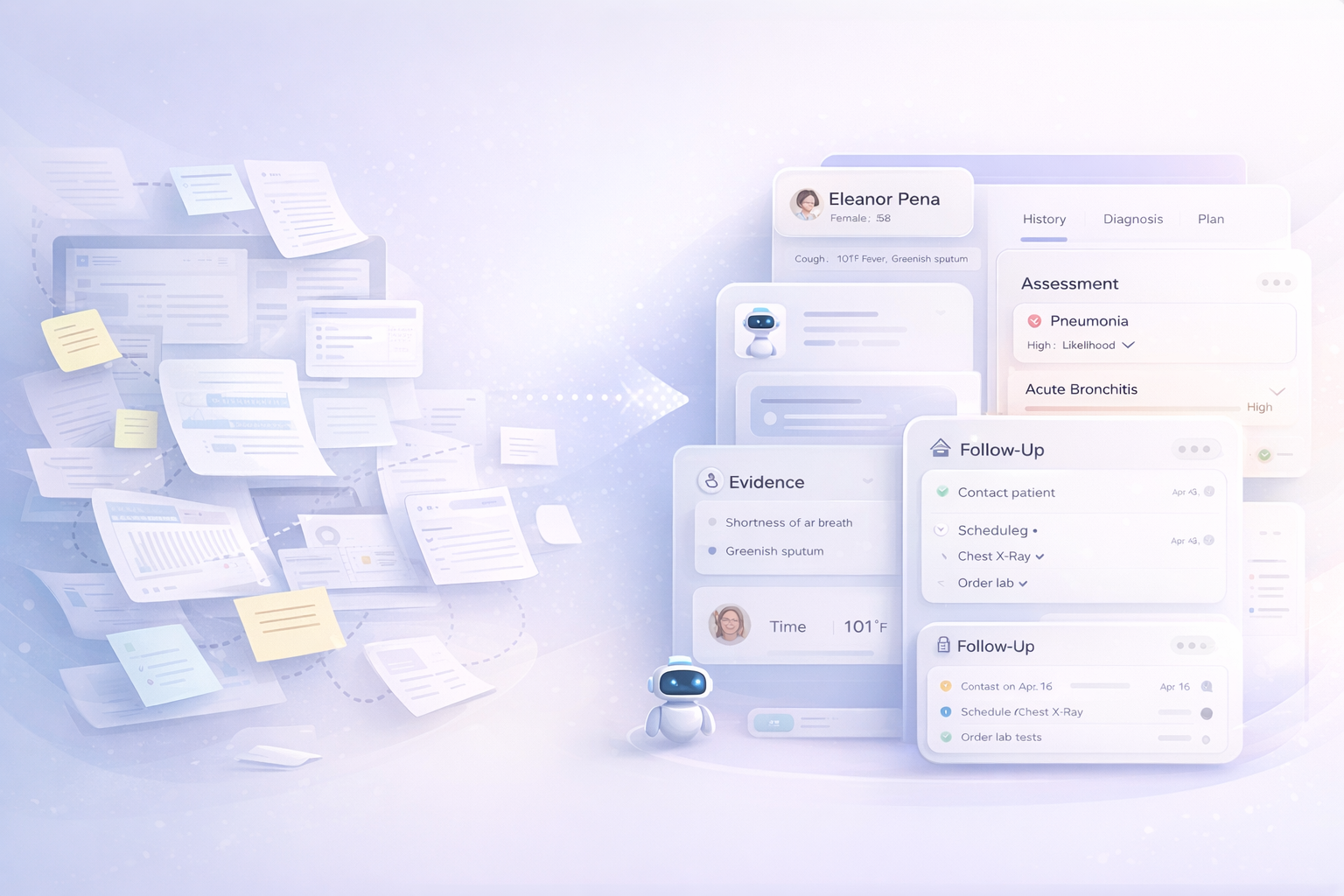
I led this project from a product and experience design perspective, shaping both the strategic direction and the interaction model of Qu’s next evolution.
My responsibilities included:
This work sits at the intersection of AI behavior design, clinical workflow strategy, and human-centered UX, with a focus on building tools clinicians can trust in high-stakes environments.
Quadrivia operates around a simple but rare conviction:
AI should serve clinicians—not the other way around.
While Qu demonstrated strong technical capability in processing patient histories, it reflected challenges common across clinical AI products:
Rather than treating these as feature gaps, this redesign reframes Qu’s role—from a tool that generates summaries into a workflow-aware assistant that participates in clinical reasoning and care coordination.
Through workflow analysis and documentation review, several systemic issues became clear:
The conclusion was clear: Qu didn’t need more features—it needed a deeper understanding of clinical realities.
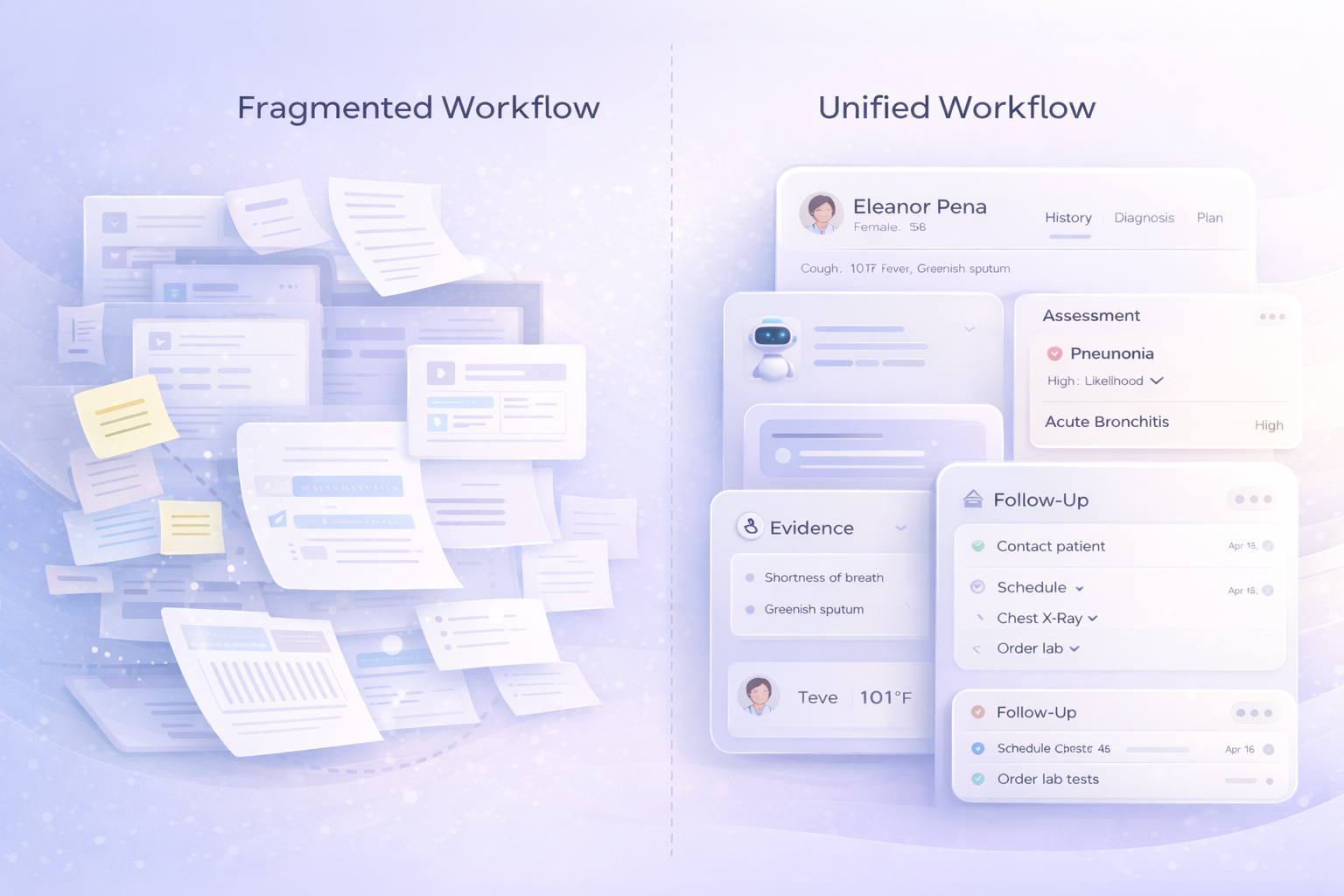
The redesign was guided by one central question:
How might Qu become a workflow-aware, clinically aligned partner that enhances clarity, trust, and team collaboration?
This resulted in five guiding goals:
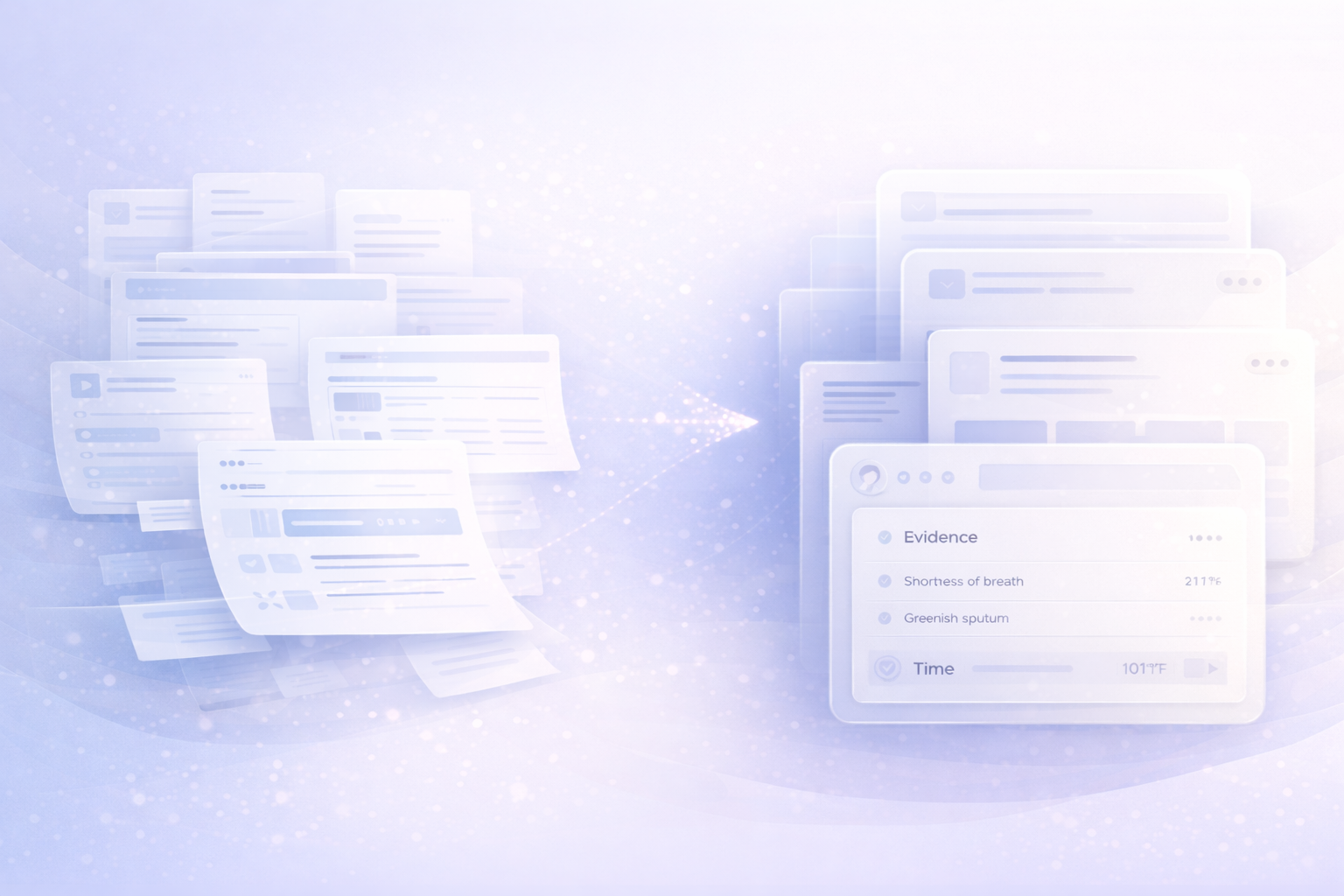
.png)
Qu was redesigned to process patient histories more intelligently—extracting timelines, identifying missing or contradictory data, and suggesting clarifying questions. The AI shifts from passive recorder to active reasoning support.
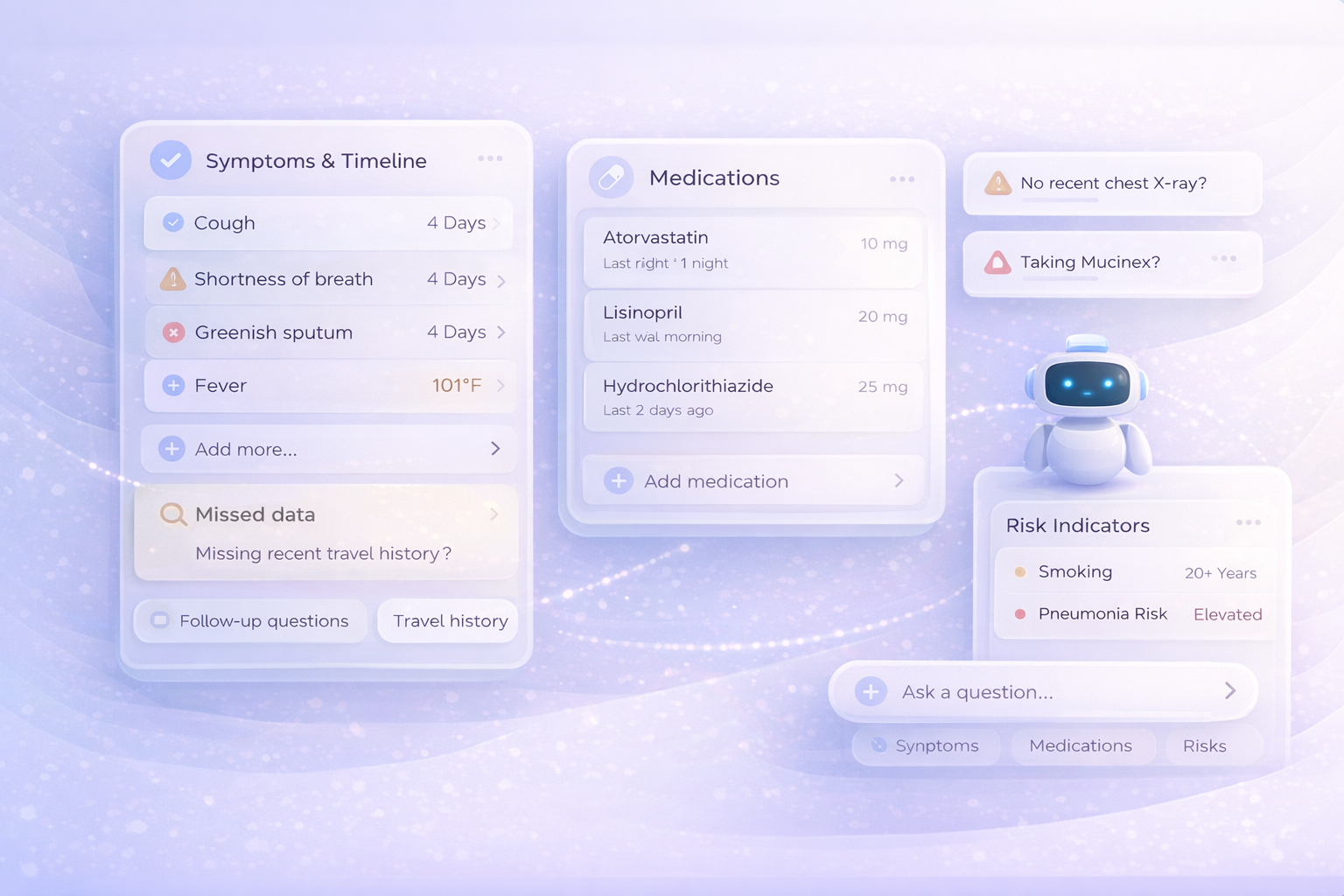
Instead of dense paragraphs, clinicians receive a clear top-line assessment supported by evidence, prioritized risk flags, medication safety checks, and timeline context—mirroring real clinical reasoning.
.png)
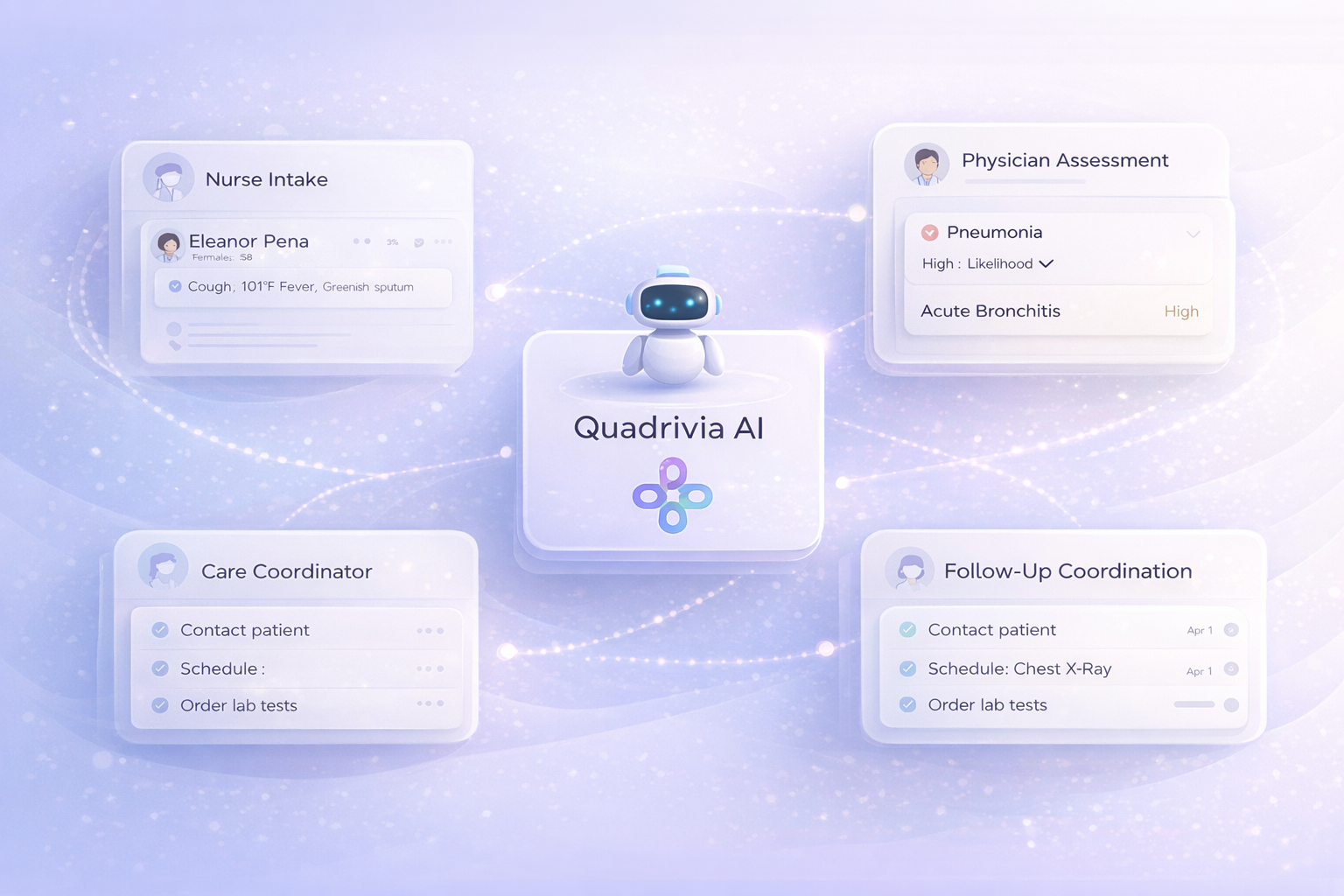
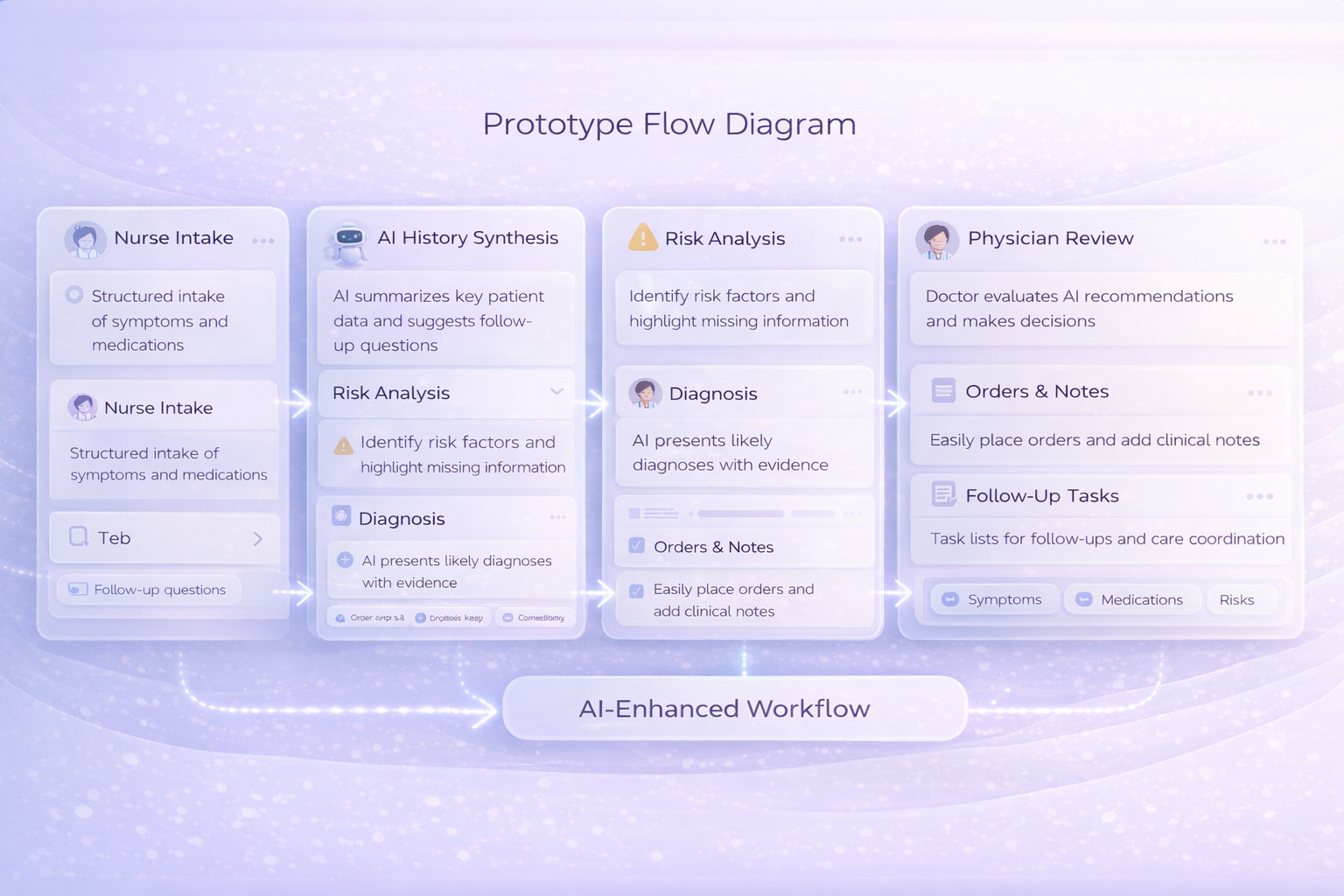
A shared dashboard connects nurse intake, physician assessment, and follow-up coordination, ensuring continuity across roles and reducing information loss.
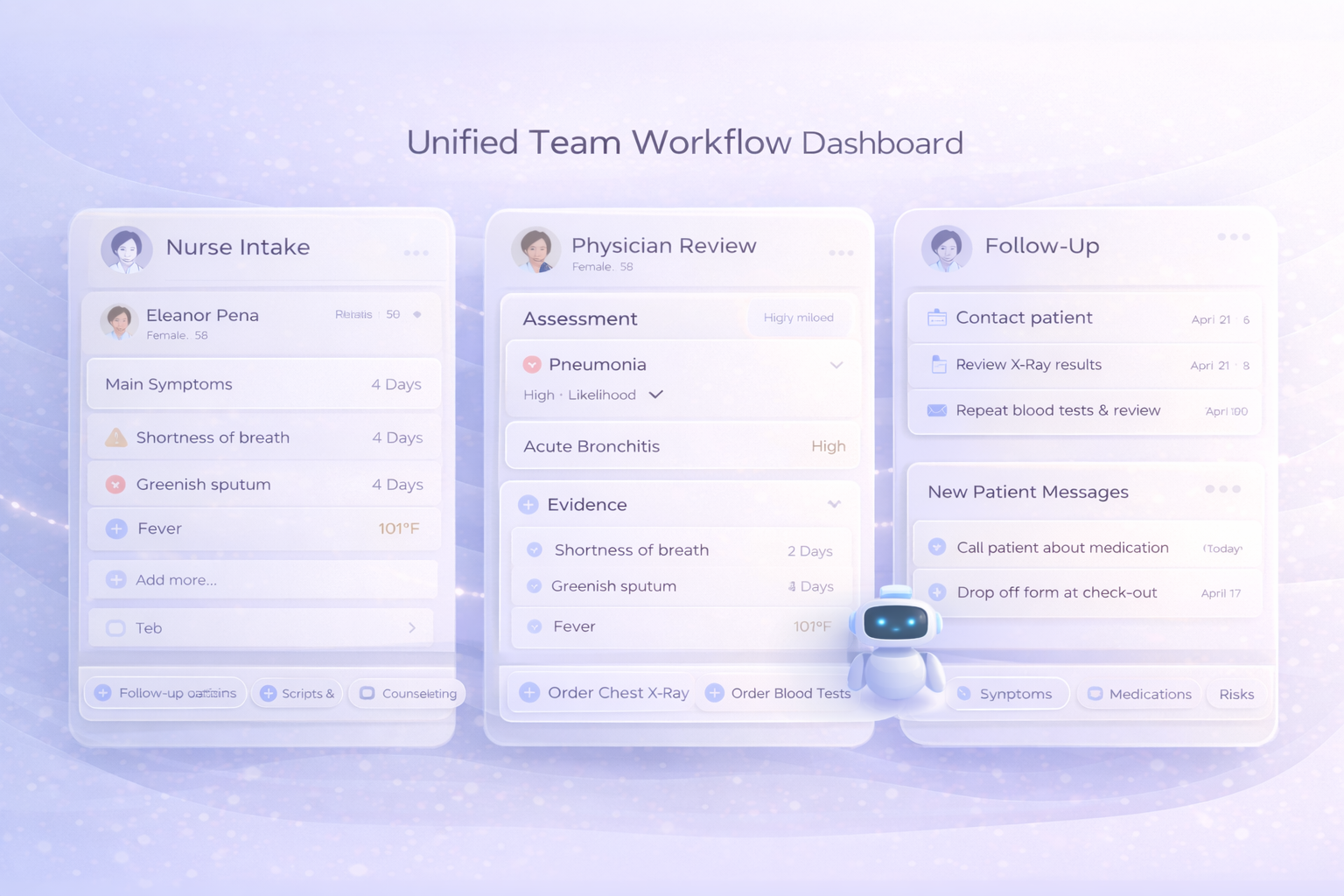
Qu provides real-time transcription and contextual translation to support clinicians during time-critical interactions. This experience is intentionally not patient-facing.
The redesigned interface is organized around four clinical modes:
Each mode is designed to reduce cognitive load, reinforce clinical hierarchy, and support efficient action under pressure.
Although conceptual, the redesign is oriented around measurable outcomes.
For clinicians:
For care teams:
At a system level:
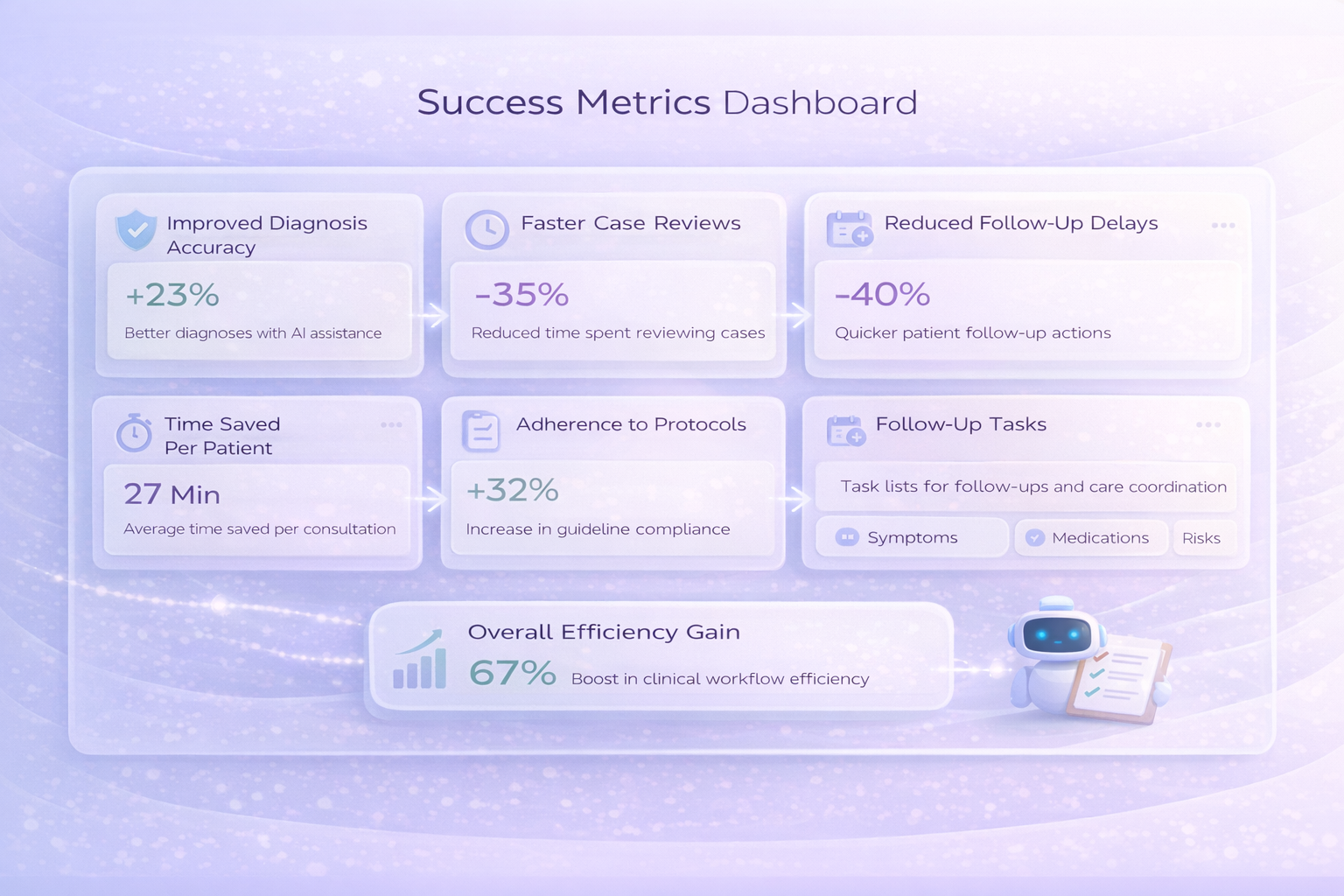
This redesign repositions Qu not as an isolated AI assistant, but as a clinical ally—one that understands the flow of care, supports decision-making, and strengthens collaboration across teams.
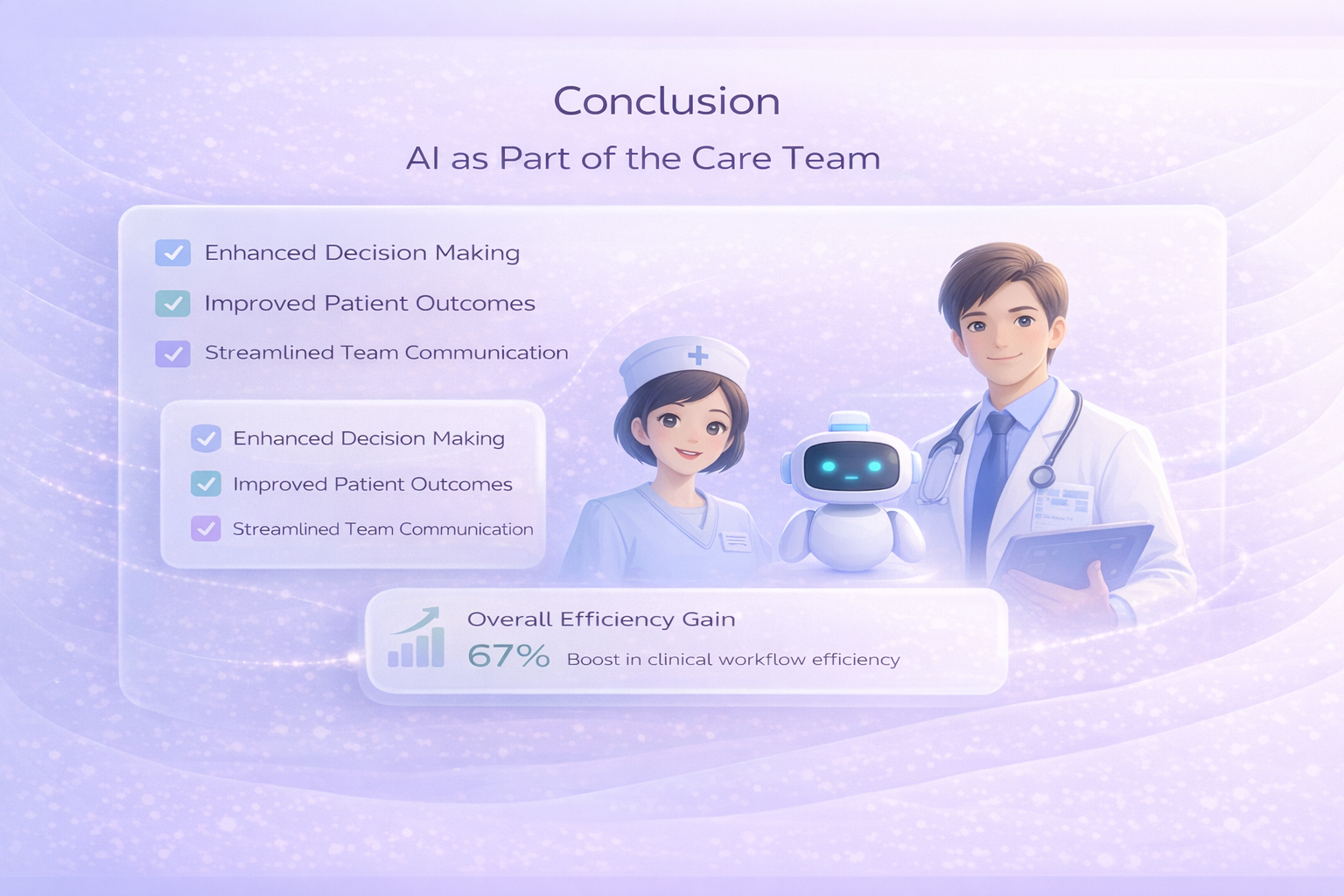
By grounding AI in the real-world rhythms of frontline medicine, Qu becomes more than a tool. It becomes part of the care team.
This project is an independent conceptual redesign created for educational and portfolio purposes only. It is not affiliated with Quadrivia AI and does not reflect proprietary data, internal models, or clinical decision logic. All workflows and interfaces shown are fictional examples intended to explore explainable, responsible AI within clinical environments.